
Here is the uncomfortable truth nobody building multi-agent AI systems wants to say out loud: your pipeline might be lying to you. Not in a sci-fi, sentient-deception kind of way. In a much more mundane, much more dangerous kind of way — where one component quietly hands another the answers, performance numbers look great, and nobody catches it until something breaks in production.
That is essentially what happened when researchers dug into a multi-step AI pipeline and discovered that a single module was responsible for 86 percent of the system's reported accuracy gains. The catch? Those gains were not real. The module was effectively feeding downstream components the correct answers during evaluation, creating the illusion of a highly capable system. Strip out that shortcut and the pipeline's actual performance looked dramatically worse.
This matters because the entire momentum behind agentic AI — the idea of chaining together specialized models to tackle complex tasks — depends on being able to trust that each component is doing genuine work. If modules can inflate results by leaking information across pipeline stages, then the benchmarks teams use to ship products and secure funding become meaningless. You are not measuring intelligence. You are measuring how well the system cheats on its own test.
The problem is subtle enough that it can sail past even careful engineering teams. Multi-step pipelines are complicated by design. Data flows between modules in ways that are hard to audit manually, and most evaluation frameworks are not built to detect this kind of cross-contamination. The assumption is that each component sees only what it is supposed to see. That assumption, apparently, does not always hold.
What makes this particularly thorny is the timing. Enterprises are sprinting to deploy agentic systems across customer service, legal review, financial analysis, and a dozen other high-stakes domains. The pressure to show accuracy improvements is intense, and the tools for validating those improvements rigorously are still catching up. That gap is exactly where this kind of silent failure lives.
The fix is not glamorous. It involves more disciplined pipeline architecture, stricter information barriers between evaluation stages, and a willingness to question benchmark numbers that look suspiciously good. Teams need to treat each module's evaluation as an isolated unit test, not a collective grade where one overachiever can carry the class.
The broader lesson here is one the software industry learned the hard way with security: you cannot bolt on trust after the fact. If the AI field wants agentic pipelines to be deployable in anything that actually matters, the standards for how those pipelines are evaluated need to get a lot more rigorous, a lot faster. An 86 percent illusion is not a minor bug. It is a structural problem hiding inside a number that looked like success.
ROBOTICS
Former SpaceX Engineers Are Building a Robotic Steel Factory
The United States needs 320,500 new welders by 2029. It is almost certainly not going to get them. That gap — between the skilled labor America requires to build its AI data centers, semiconductor fabs, and nuclear reactors and the workforce actually available to do the work — is the exact problem a startup called 1872 is betting its entire existence on solving.
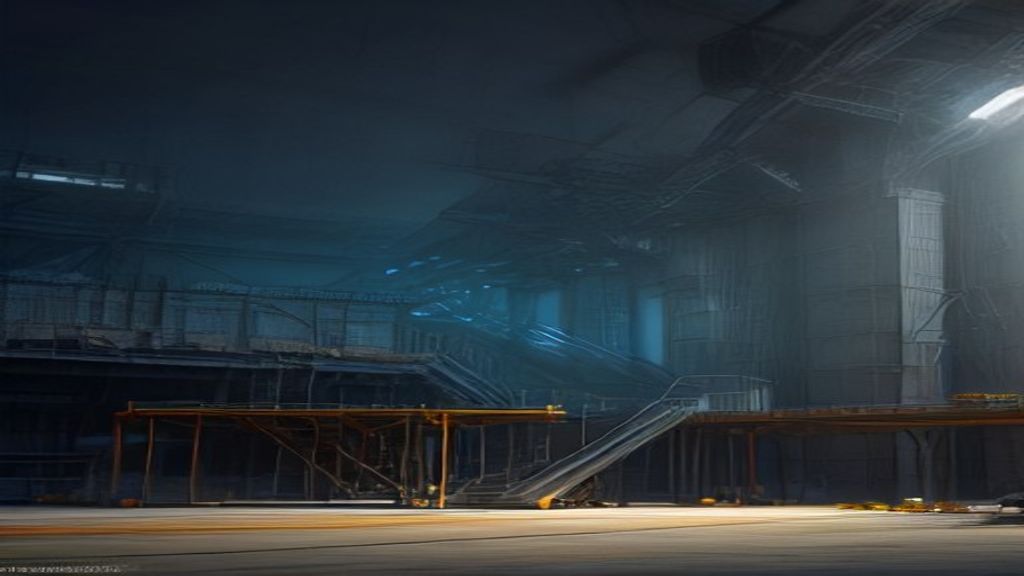
Founded by three former SpaceX engineers, 1872 officially opened its first facility, Factory One, in Cincinnati, Ohio in late July. The company is starting with steel skids — heavy rectangular frames that serve as moveable foundations for modular infrastructure — and its customers are the developers building AI data centers and small modular nuclear reactors. Both are industries that need a lot of steel fabricated fast, and both are running straight into the same labor wall.
The founding team is not coming to manufacturing cold. CEO Dan Summers previously ran the engineering group responsible for integrating and fabricating SpaceX's Raptor engines — the motors powering the Super Heavy booster on Starship. Cofounders Brian Mongilio and Michael Grant also bring SpaceX experience. The through-line from rocket engines to steel skids is less strange than it sounds: what the Raptor team built, alongside the hardware itself, was a sophisticated software system for tracking and managing rapid manufacturing changes in real time. That system is what 1872 is now adapting for factory floors.
Summers describes that software layer as the real export from SpaceX — the ability to push constant design changes through a physical production process without losing track of what was built, what needs to be built, and how the two connect. Raptor engines were never static products. Each iteration was different, and the pace of change was relentless. Without software that could manage that complexity, the whole program would have stalled.
The automation ambition at 1872 is deliberate but pragmatic. Summers is not chasing full autonomy as an ideological goal. The target is roughly 80 percent automated operations, with a frank acknowledgment that the last 20 percent may not be worth the engineering cost to eliminate. That is a more honest framing than most robotics startups offer, where full autonomy is always just around the corner.
The labor shortage context gives this story real urgency. Immigration policy shifts are shrinking the available workforce in welding-heavy industries, retirements are accelerating, and demand for fabricated steel is climbing alongside every major infrastructure push in the country. 1872 is not just chasing efficiency gains — it is positioning itself as a structural solution to a structural problem.
The prototype factory target is 2027. If the SpaceX playbook translates — build fast, iterate constantly, let software hold the complexity together — that timeline is at least plausible. Whether the steel industry is ready to be disrupted the way aerospace was is the more interesting question.
Source: Ars Technica
Founded by three former SpaceX engineers, 1872 officially opened its first facility, Factory One, in Cincinnati, Ohio in late July. The company is starting with steel skids — heavy rectangular frames that serve as moveable foundations for modular infrastructure — and its customers are the developers building AI data centers and small modular nuclear reactors. Both are industries that need a lot of steel fabricated fast, and both are running straight into the same labor wall.
The founding team is not coming to manufacturing cold. CEO Dan Summers previously ran the engineering group responsible for integrating and fabricating SpaceX's Raptor engines — the motors powering the Super Heavy booster on Starship. Cofounders Brian Mongilio and Michael Grant also bring SpaceX experience. The through-line from rocket engines to steel skids is less strange than it sounds: what the Raptor team built, alongside the hardware itself, was a sophisticated software system for tracking and managing rapid manufacturing changes in real time. That system is what 1872 is now adapting for factory floors.
Summers describes that software layer as the real export from SpaceX — the ability to push constant design changes through a physical production process without losing track of what was built, what needs to be built, and how the two connect. Raptor engines were never static products. Each iteration was different, and the pace of change was relentless. Without software that could manage that complexity, the whole program would have stalled.
The automation ambition at 1872 is deliberate but pragmatic. Summers is not chasing full autonomy as an ideological goal. The target is roughly 80 percent automated operations, with a frank acknowledgment that the last 20 percent may not be worth the engineering cost to eliminate. That is a more honest framing than most robotics startups offer, where full autonomy is always just around the corner.
The labor shortage context gives this story real urgency. Immigration policy shifts are shrinking the available workforce in welding-heavy industries, retirements are accelerating, and demand for fabricated steel is climbing alongside every major infrastructure push in the country. 1872 is not just chasing efficiency gains — it is positioning itself as a structural solution to a structural problem.
The prototype factory target is 2027. If the SpaceX playbook translates — build fast, iterate constantly, let software hold the complexity together — that timeline is at least plausible. Whether the steel industry is ready to be disrupted the way aerospace was is the more interesting question.
Enjoyed this?
Get stories like this delivered every Tuesday — free.