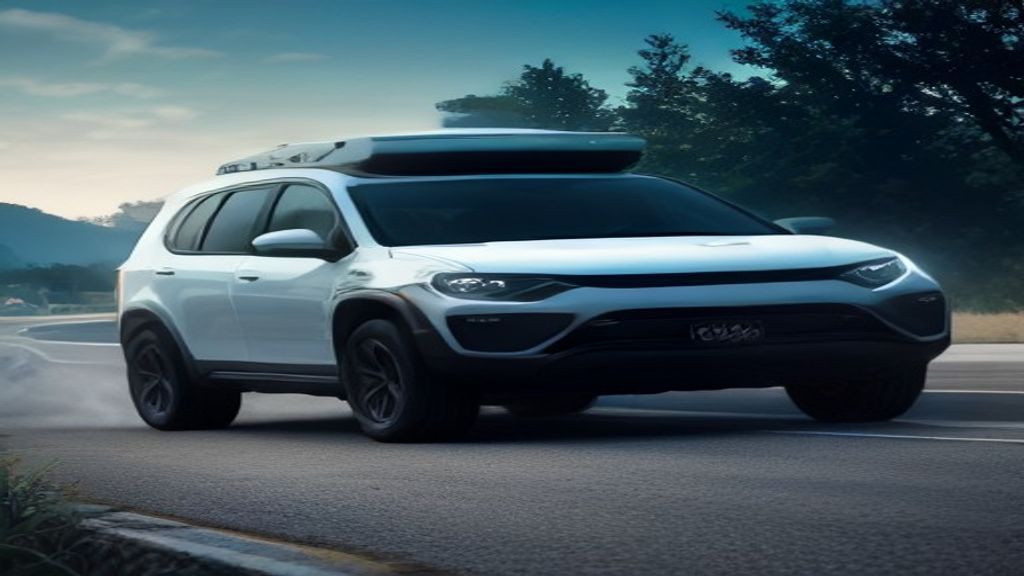
One neighbor described living next to a Waymo charging facility as sounding like "Tron outside your window." That quote alone tells you everything about how badly the rollout of autonomous vehicle infrastructure has collided with the reality of residential neighborhoods.
A Los Angeles Superior Court judge this week handed the City of Santa Monica a significant win, granting a preliminary injunction that bars Waymo from running its Broadway charging stations between 11 pm and 6 am. The ruling comes after more than a year of complaints from residents who say the constant movement of autonomous vehicles — the beeping, the headlights, the acceleration hum — turned their neighborhood into something resembling a logistics depot.
The locations in question are not exactly industrial backstreets. The Broadway charging lots sit directly across from a private school, with apartment buildings hemming in the area on multiple sides. Residents say the worst hours were the ones after last call, when the lots apparently ran at full capacity and the noise was relentless. One self-described night owl said the sound of EVs accelerating and decelerating in rapid succession was unlike anything a typical city block should have to absorb at 2 in the morning.
Waymo began using these facilities in January 2025, and the complaints started almost immediately. An online petition followed. The city issued an order to halt overnight operations. Waymo apparently did not comply to the city's satisfaction, which led Santa Monica to file a formal public nuisance lawsuit in November 2025. Waymo countersued. And now, some nine months later, a judge has sided with the neighborhood — at least temporarily, while the full case plays out.
The reaction from residents has been striking. One neighbor who built an entire website dedicated to documenting the problem said he walked the block after the order took effect and could hear crickets for the first time in what felt like ages. That is a genuinely damning detail for a company that prides itself on being a good-faith participant in the communities where it operates.
The broader issue here is not really about noise ordinances or zoning technicalities. It is about what happens when tech companies treat physical infrastructure as a pure logistics problem and underestimate the human cost of getting it wrong. Waymo is not a startup operating out of a garage anymore. It is a well-funded, commercially active robotaxi service with dozens of vehicles cycling through charging facilities in dense urban areas. The expectation that neighbors would just adapt was always going to be a losing bet.
Waymo has appealed the ruling and had not responded to press questions at time of publication. The next scheduled court hearing is set for October 2026, which means this fight has plenty of road left to run. In the meantime, Santa Monica gets its crickets back.

AI
ByteDance Seedance 2.5 Generates Full 30-Second Videos in One Shot
Thirty seconds of high-quality AI-generated video, produced in a single run, no stitching required. That is what ByteDance is now putting in front of users, and it represents a meaningful step change from where video generation models were even twelve months ago.
ByteDance dropped Seedance 2.5 this week, the newest iteration of its Seed video model family. The headline capability is straightforward but genuinely impressive: the model can produce a full 30-second clip end-to-end without needing to generate and splice together shorter segments. For anyone who has spent time wrestling with video AI tools that top out at four or six seconds per generation, that number lands differently than it might seem on paper.
The input flexibility is also worth paying attention to. Users can feed the model up to 30 images, 10 video clips, and 10 audio files in a single prompt. That kind of multimodal reference capacity moves Seedance 2.5 closer to the way a human creative director actually works — pulling from a mix of visual references, existing footage, and audio direction to shape a final output. It is not just about raw length; it is about giving the model enough context to produce something intentional rather than something generic.
The model is rolling out now on Jimeng AI and the Pro tier of Doubao, ByteDance's AI assistant product. An API is also expected to arrive on Volcano Engine's Ark platform shortly, which will open it up to third-party developers building on top of ByteDance's infrastructure.
The timing matters. Video generation is arguably the hottest battleground in AI right now, with OpenAI's Sora, Google's Veo, and a growing list of competitors all racing to define what the category looks like at commercial scale. ByteDance has a structural advantage here that is easy to underestimate: it owns TikTok and Douyin, two of the highest-volume short-form video platforms on earth. That means it has access to an almost incomprehensible amount of video data to train on, and it has a ready-made distribution channel to test and iterate against real user behavior.
There is also a competitive pressure angle that makes this launch notable beyond the specs. Chinese AI labs have been closing the gap with their Western counterparts faster than most observers predicted, and video generation is one of the clearest examples of that acceleration. ByteDance is not playing catch-up here — it is competing at the frontier.
What remains to be seen is how Seedance 2.5 performs in independent benchmarks against Sora or Veo 3, and whether the quality holds up across diverse creative use cases rather than cherry-picked demos. ByteDance has historically been strong at optimizing for engagement, and video AI is about to find out if that instinct translates into a genuinely superior product.
Source: TechNode
ByteDance dropped Seedance 2.5 this week, the newest iteration of its Seed video model family. The headline capability is straightforward but genuinely impressive: the model can produce a full 30-second clip end-to-end without needing to generate and splice together shorter segments. For anyone who has spent time wrestling with video AI tools that top out at four or six seconds per generation, that number lands differently than it might seem on paper.
The input flexibility is also worth paying attention to. Users can feed the model up to 30 images, 10 video clips, and 10 audio files in a single prompt. That kind of multimodal reference capacity moves Seedance 2.5 closer to the way a human creative director actually works — pulling from a mix of visual references, existing footage, and audio direction to shape a final output. It is not just about raw length; it is about giving the model enough context to produce something intentional rather than something generic.
The model is rolling out now on Jimeng AI and the Pro tier of Doubao, ByteDance's AI assistant product. An API is also expected to arrive on Volcano Engine's Ark platform shortly, which will open it up to third-party developers building on top of ByteDance's infrastructure.
The timing matters. Video generation is arguably the hottest battleground in AI right now, with OpenAI's Sora, Google's Veo, and a growing list of competitors all racing to define what the category looks like at commercial scale. ByteDance has a structural advantage here that is easy to underestimate: it owns TikTok and Douyin, two of the highest-volume short-form video platforms on earth. That means it has access to an almost incomprehensible amount of video data to train on, and it has a ready-made distribution channel to test and iterate against real user behavior.
There is also a competitive pressure angle that makes this launch notable beyond the specs. Chinese AI labs have been closing the gap with their Western counterparts faster than most observers predicted, and video generation is one of the clearest examples of that acceleration. ByteDance is not playing catch-up here — it is competing at the frontier.
What remains to be seen is how Seedance 2.5 performs in independent benchmarks against Sora or Veo 3, and whether the quality holds up across diverse creative use cases rather than cherry-picked demos. ByteDance has historically been strong at optimizing for engagement, and video AI is about to find out if that instinct translates into a genuinely superior product.
Enjoyed this?
Get stories like this delivered every Tuesday — free.