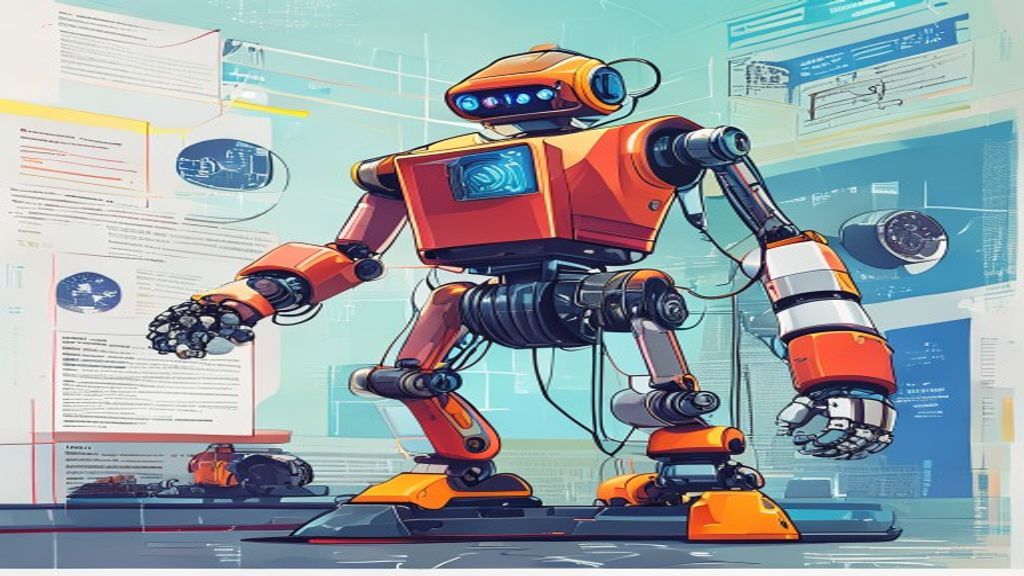
Here is the uncomfortable irony at the center of America's new robot ban: the researchers most likely to feel the pain are American ones.
The FCC just added "foreign-produced advanced robotic devices" to its national security Covered List, which is the same list that previously took out Huawei and other Chinese telecom gear. The stated rationale is cybersecurity — Chinese-made robots have shown real vulnerabilities in the past, and the administration is treating the entire category as a national security liability. Fair enough, on the surface.
But the ban does not stop at Chinese-made machines. It sweeps in robots manufactured in Japan, South Korea, Germany, and virtually every other country outside the United States. That is a remarkably broad net, and it catches a lot of hardware that American robotics labs depend on right now.
Take Unitree's humanoid robots. They are affordable, capable, and widely used in US research settings for everything from locomotion experiments to early-stage surgical robotics. Under the new rules, labs cannot buy new models going forward. They can keep the machines they already own, and they can purchase existing models that previously cleared FCC authorization — but the moment a manufacturer releases an updated version, that new model is off the table.
The technical definition of a "covered" robot is worth understanding. To qualify for the ban, a device needs to be a mobile ground-based machine — humanoid, quadruped, or autonomous mobile robot — weighing more than 4.4 pounds, capable of sensing its environment, and equipped with network connectivity faster than 200 kbps. Onboard AI or cloud-connected software pushes it firmly into restricted territory.
That weight threshold creates one notable carve-out: small robotic toys are fine. Most robot vacuums are not. The Roborock and Dreame devices that have quietly taken over the floor-cleaning market are almost entirely manufactured in China, and the newest models will no longer be available to American consumers once they hit that unauthorized-new-model threshold.
The FCC did not add robots to the Covered List on its own. Federal law requires a qualifying national security authority to make that call, and the White House convened an interagency body to do exactly that. So this is a coordinated executive branch decision, not a rogue agency move.
The question nobody is answering cleanly right now is whether American robotics manufacturers can actually fill the gap. Domestic production is growing, but it is nowhere near the scale needed to replace the volume and variety of foreign-made machines that researchers, hospitals, warehouses, and ordinary households currently rely on. Protecting an industry by cutting off its supply chain is a strategy that requires the domestic alternative to already exist. In robotics, it largely does not yet.
The ban applies to new models only, which gives the market some runway. But the clock is ticking, and the pressure on American manufacturers to scale up fast just got very real.
AI
Microsoft Confirms Copilot Super App Launching This Year
Microsoft just quietly confirmed one of the more significant product moves in its recent history, and it happened during an earnings call that most people tuned into for revenue figures.
Satya Nadella told investors this week that Microsoft is bringing its various Copilot experiences together into a single super app before the end of the year. That means the general-purpose Copilot chatbot, GitHub Copilot for coding, the Cowork collaboration layer, and the agentic Autopilot system are all getting unified under one roof. Nadella framed it as Copilot evolving from a chat tool into something that can both collaborate alongside you and act autonomously on your behalf.
The confirmation is not entirely surprising — Fortune reported on the super app plans months ago — but Nadella saying it directly on an earnings call is a different level of commitment. This is now an official launch timeline, not a rumor.
The competitive context matters here. OpenAI just launched ChatGPT Work, which bundles ChatGPT with its Codex coding assistant into a single product aimed at professional users. Google has been consolidating its AI tools around Gemini for months. Every major AI player is running toward the same destination: one app that handles your questions, your code, your tasks, and eventually your calendar, email, and meetings without you having to switch between five different tools.
Microsoft has a structural advantage in this race that does not get discussed enough. It already owns the productivity software that most companies run on. Word, Excel, Teams, Outlook — Copilot is not trying to break into people's workflows from the outside. It is already inside the tools people use every day, and the super app is essentially Microsoft pulling all of those touch points into a single, coherent experience.
The financial backdrop reinforces why Microsoft is moving fast. The company posted $90 billion in quarterly revenue, with AI and cloud as the primary growth engines. That kind of result gives Nadella both the resources and the investor mandate to keep pushing aggressively.
What remains unclear is exactly how the super app will handle the tension between consumer and commercial users. Nadella specifically said the app will span both, which is an ambitious design challenge. The things a developer wants from a coding assistant and the things a small business owner wants from a chat interface are genuinely different, and cramming them into one product without making it feel cluttered is harder than it sounds.
Microsoft says more details are coming soon. Given that "this quarter" is already ticking, soon probably means weeks, not months. The AI app wars are about to get a lot more interesting.
Source: The Verge
Satya Nadella told investors this week that Microsoft is bringing its various Copilot experiences together into a single super app before the end of the year. That means the general-purpose Copilot chatbot, GitHub Copilot for coding, the Cowork collaboration layer, and the agentic Autopilot system are all getting unified under one roof. Nadella framed it as Copilot evolving from a chat tool into something that can both collaborate alongside you and act autonomously on your behalf.
The confirmation is not entirely surprising — Fortune reported on the super app plans months ago — but Nadella saying it directly on an earnings call is a different level of commitment. This is now an official launch timeline, not a rumor.
The competitive context matters here. OpenAI just launched ChatGPT Work, which bundles ChatGPT with its Codex coding assistant into a single product aimed at professional users. Google has been consolidating its AI tools around Gemini for months. Every major AI player is running toward the same destination: one app that handles your questions, your code, your tasks, and eventually your calendar, email, and meetings without you having to switch between five different tools.
Microsoft has a structural advantage in this race that does not get discussed enough. It already owns the productivity software that most companies run on. Word, Excel, Teams, Outlook — Copilot is not trying to break into people's workflows from the outside. It is already inside the tools people use every day, and the super app is essentially Microsoft pulling all of those touch points into a single, coherent experience.
The financial backdrop reinforces why Microsoft is moving fast. The company posted $90 billion in quarterly revenue, with AI and cloud as the primary growth engines. That kind of result gives Nadella both the resources and the investor mandate to keep pushing aggressively.
What remains unclear is exactly how the super app will handle the tension between consumer and commercial users. Nadella specifically said the app will span both, which is an ambitious design challenge. The things a developer wants from a coding assistant and the things a small business owner wants from a chat interface are genuinely different, and cramming them into one product without making it feel cluttered is harder than it sounds.
Microsoft says more details are coming soon. Given that "this quarter" is already ticking, soon probably means weeks, not months. The AI app wars are about to get a lot more interesting.
Enjoyed this?
Get stories like this delivered every Tuesday — free.