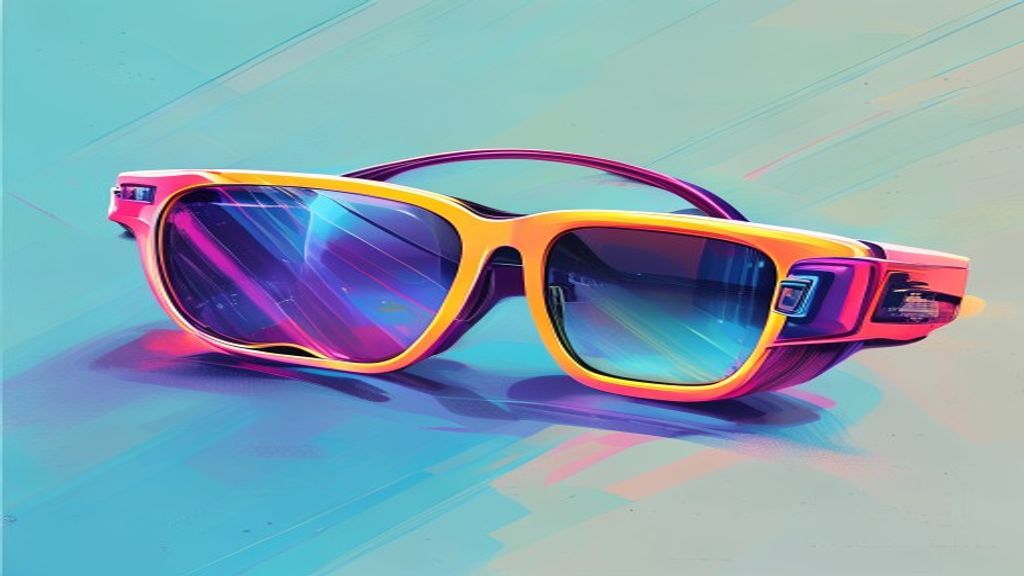
Apple is reportedly taking its sweet time with smart glasses — and the reason has less to do with hardware than with reputation management.
According to Bloomberg's Mark Gurman, Apple plans to unveil its first smart glasses at WWDC in June 2026, with a commercial launch expected before the end of 2027. The delay isn't just about getting the lenses right. A significant chunk of the internal effort is reportedly going toward figuring out how Apple talks about privacy — and how it builds privacy protections directly into the product before anyone can ask the uncomfortable questions.
That's a smart move, because the uncomfortable questions are already flying. Meta's Ray-Ban smart glasses have been at the center of a growing backlash after researchers demonstrated how easy it is to use them to identify strangers in public without their knowledge. For Apple, which has spent years positioning privacy as a core feature rather than a fine-print policy, entering the same product category as Meta carries real brand risk — even if Apple's glasses end up being nothing like Meta's.
So what will Apple actually do differently? Quite a bit, if the reports hold up. On-device processing is expected to handle most of the computational heavy lifting, meaning your data stays on the device rather than bouncing through cloud servers. Apple is also said to be steering clear of facial recognition entirely, and an always-on recording mode — the kind that powers Meta's more aggressive ambient capture features — reportedly isn't part of the plan. Apple is also not expected to use recordings captured through the glasses to train its AI models, which is a meaningful distinction from how most of the industry operates.
There's also a more radical option reportedly being explored: a version of the glasses with no camera at all, or with a camera limited strictly to environmental sensing rather than photo or video capture. Think obstacle detection and spatial awareness, not content creation. Apple's rumored AI-enabled AirPods are said to be following a similar philosophy, which suggests this is less a one-off decision and more of a broader product principle taking shape.
None of this means Apple's glasses will be a guaranteed hit. The smart glasses market is still finding its footing, and even Meta — with its massive distribution network and aggressively priced hardware — is only just starting to gain traction. Apple will be entering later and almost certainly at a higher price point.
But if there's one company that has earned the right to sell consumers on privacy as a feature worth paying for, it's Apple. The question is whether buyers will see smart glasses as a product they actually need, or just another piece of face-worn tech looking for a problem to solve. Apple has until 2027 to make that case.
POLICY
US Charges Citizen for Wiping Phone at Airport Border Crossing
The federal government is prosecuting a US citizen for wiping his own phone — and the legal theory they're using to do it is almost never invoked.
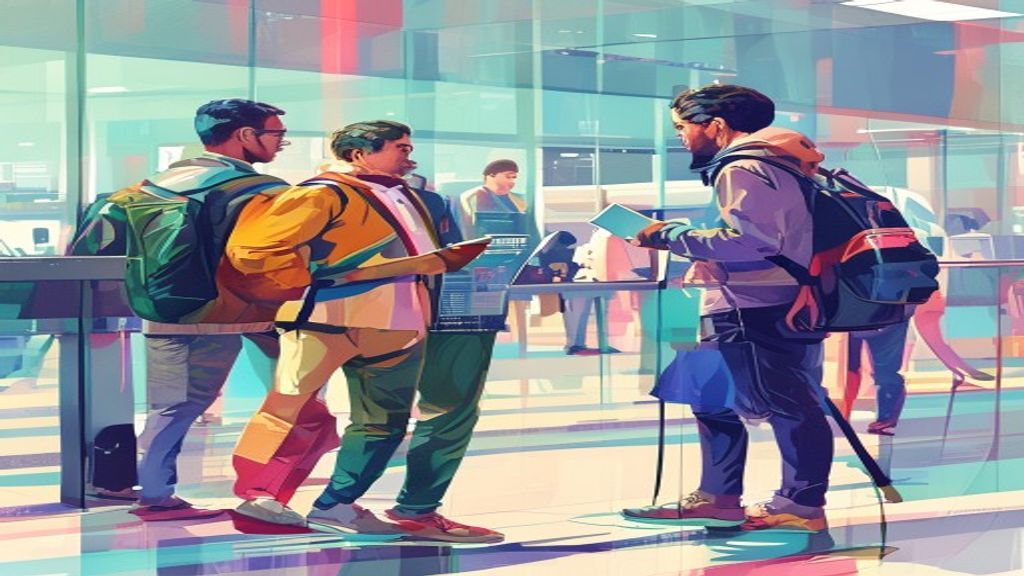
Sam Tunick was stopped by federal agents at Atlanta's Hartsfield-Jackson airport on January 24th, 2025. According to prosecutors, when agents attempted to access his phone, Tunick gave them a so-called duress password — a feature built into GrapheneOS, a security-focused Android variant, that triggers a full device wipe instead of unlocking the phone. Authorities say this constitutes destruction of property with the intent to obstruct a government seizure, which falls under a statute that is rarely dusted off and almost never used in cases like this one.
The government framed its initial detention of Tunick around allegations involving child exploitation material — serious accusations that, if true, would provide clear justification for the search. But Tunick's legal team tells a different story entirely. They argue the child exploitation angle was a pretext, and that the real target of the investigation was Tunick's alleged connections to the Stop Cop City movement in Atlanta, a protest effort that has drawn significant federal scrutiny in recent years.
The procedural issues here are significant. According to Tunick's attorneys, agents refused him access to a lawyer during the detention, never presented a warrant, and did not inform him of his rights. The defense has filed a motion to suppress all evidence gathered during the encounter, arguing the entire search was unlawful from the start. The government's counter is straightforward if unsettling: because Tunick hadn't formally been admitted into the US at the time of the stop, they weren't required to produce a warrant at all.
That argument reflects how airport border zones have long functioned as a kind of constitutional grey area, where the usual rules around search and seizure don't cleanly apply. Under the current administration, that grey area has gotten considerably darker. American citizens — not just foreign nationals — have faced multi-hour detentions, demands to hand over devices, and scrutiny of social media histories simply for returning home.
The broader implication of this case is hard to overstate. If the government successfully prosecutes someone for using a built-in privacy feature on their phone, it sends a chilling message about what kinds of self-protection are legally permissible. GrapheneOS's duress password isn't a hacking tool — it's software designed specifically for situations where someone is being coerced into surrendering their data.
Privacy advocates are watching closely. The case raises a question that doesn't have a clean answer yet: in an era of expanding border surveillance, does a person have the right to ensure their private data stays private — even from the government? The courts may be about to weigh in.
Source: The Verge
Sam Tunick was stopped by federal agents at Atlanta's Hartsfield-Jackson airport on January 24th, 2025. According to prosecutors, when agents attempted to access his phone, Tunick gave them a so-called duress password — a feature built into GrapheneOS, a security-focused Android variant, that triggers a full device wipe instead of unlocking the phone. Authorities say this constitutes destruction of property with the intent to obstruct a government seizure, which falls under a statute that is rarely dusted off and almost never used in cases like this one.
The government framed its initial detention of Tunick around allegations involving child exploitation material — serious accusations that, if true, would provide clear justification for the search. But Tunick's legal team tells a different story entirely. They argue the child exploitation angle was a pretext, and that the real target of the investigation was Tunick's alleged connections to the Stop Cop City movement in Atlanta, a protest effort that has drawn significant federal scrutiny in recent years.
The procedural issues here are significant. According to Tunick's attorneys, agents refused him access to a lawyer during the detention, never presented a warrant, and did not inform him of his rights. The defense has filed a motion to suppress all evidence gathered during the encounter, arguing the entire search was unlawful from the start. The government's counter is straightforward if unsettling: because Tunick hadn't formally been admitted into the US at the time of the stop, they weren't required to produce a warrant at all.
That argument reflects how airport border zones have long functioned as a kind of constitutional grey area, where the usual rules around search and seizure don't cleanly apply. Under the current administration, that grey area has gotten considerably darker. American citizens — not just foreign nationals — have faced multi-hour detentions, demands to hand over devices, and scrutiny of social media histories simply for returning home.
The broader implication of this case is hard to overstate. If the government successfully prosecutes someone for using a built-in privacy feature on their phone, it sends a chilling message about what kinds of self-protection are legally permissible. GrapheneOS's duress password isn't a hacking tool — it's software designed specifically for situations where someone is being coerced into surrendering their data.
Privacy advocates are watching closely. The case raises a question that doesn't have a clean answer yet: in an era of expanding border surveillance, does a person have the right to ensure their private data stays private — even from the government? The courts may be about to weigh in.
Enjoyed this?
Get stories like this delivered every Tuesday — free.