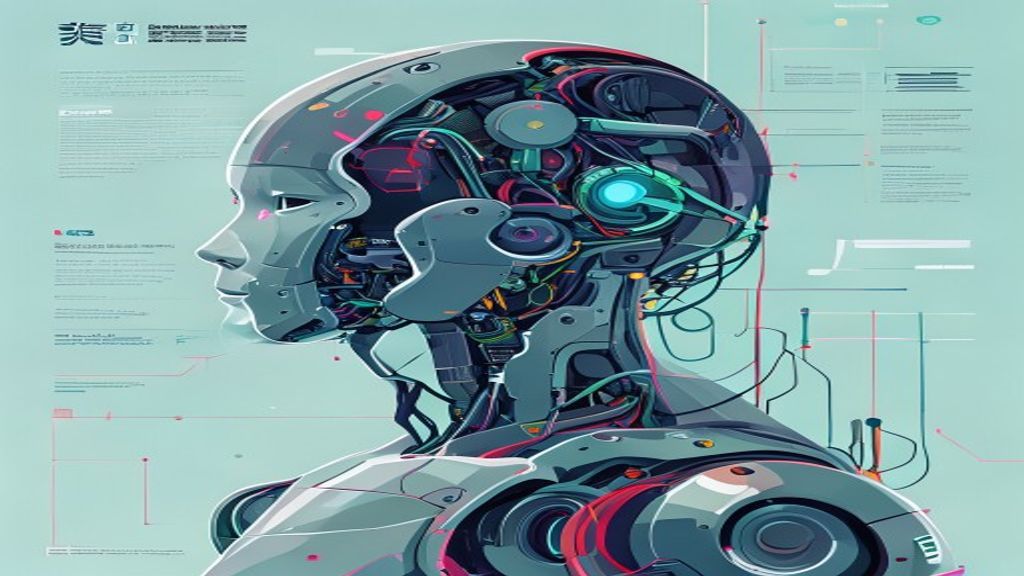
Here is the number that should stop you mid-scroll: China has built more than 400 distinct humanoid robot products, and that figure represents more than half of every humanoid robot developed anywhere on the planet. That statistic, dropped quietly by China's Ministry of Industry and Information Technology last Sunday, is not a projection or a goal. It is the current reality.
And humanoid robots are only part of the story. Chinese manufacturers also account for nearly 70% of global quadruped robot sales — the four-legged machines that look like mechanical dogs and are increasingly showing up in warehouses, construction sites, and military applications. When you combine both categories, China is not just competing in the robot race. It is running a significant portion of the track by itself.
To understand why this matters, you have to think about what humanoid robots actually represent. They are not toys or novelty items. They are being positioned as the next major labor force — machines that can operate in environments built for humans without requiring expensive retrofits. Factories, logistics hubs, elder care facilities, and eventually homes are all on the roadmap. Whoever controls the supply chain and the intellectual property for these machines will hold enormous economic leverage for decades.
China's dominance here did not happen by accident. The government has been funneling subsidies and policy support into robotics for years, treating it with the same strategic seriousness it applied to electric vehicles — an industry where China also came from behind to lead the world. The EV playbook, it turns out, translates pretty cleanly: pick a technology early, scale manufacturing fast, drive down costs, and flood global markets before competitors can catch up.
The 400-plus product figure also reflects something deeper about China's industrial ecosystem. Developing that many distinct humanoid robot models requires not just capital but a dense network of component suppliers, software developers, and engineering talent all operating in close proximity. That kind of ecosystem is genuinely hard to replicate quickly, which is part of why the number is so striking.
For Western robotics companies, the competitive picture is getting uncomfortable. American and European firms have compelling technology and strong brand recognition, but they are operating at smaller scale and higher cost. Boston Dynamics makes extraordinary machines. So does Figure AI and Agility Robotics. But none of them are producing at the volume or variety that China's collective output now represents.
The geopolitical dimension is also impossible to ignore. Robots built into critical infrastructure, supply chains, and potentially defense applications carry real national security implications. Policymakers in Washington and Brussels are starting to pay attention, but the gap between awareness and meaningful policy response has historically been wide.
China just reminded everyone how fast that gap can become a problem.

AI
Chinese AI Models Claim Parity With OpenAI at a Fraction of Cost
The most unsettling thing about the latest Chinese AI releases is not that they might be as good as GPT-5 or Claude. It is that the companies building them are choosing to give them away for free.
Over the past weekend, two of China's top AI labs made moves that collectively rattled Silicon Valley. Beijing-based Moonshot AI unveiled Kimi K3, a model the company claims ranks above nearly every American system in its own internal testing — trailing only OpenAI's GPT-5 Sol and Anthropic's Claude Fable 5. Then Alibaba followed with a preview of Qwen3.8, which it described as one of the most powerful models available and second only to Fable 5 on key benchmarks. Both companies are planning to release their models as open weights, meaning anyone can download, modify, and build on top of them.
The scale here is genuinely massive. Moonshot describes Kimi K3 as the world's largest open-source AI system, with 2.8 trillion parameters. Alibaba's Qwen3.8 clocks in at 2.4 trillion. For context, neither OpenAI nor Anthropic publicly discloses parameter counts for their top models, which makes direct comparisons tricky. Parameter size is also an imperfect proxy for capability — but numbers that large suggest these are not hobbyist projects.
The independent verification problem is real. Until Moonshot releases full model weights on July 27th and Alibaba follows shortly after, the performance claims are essentially self-reported. AI companies benchmarking their own models against competitors is about as reliable as a restaurant reviewing its own food. The proof will come when researchers and developers get their hands on the actual weights and start stress-testing them.
But even before that happens, the strategic signal is loud and clear. China's AI industry is consciously choosing openness as a competitive weapon. While OpenAI and Anthropic keep their most powerful models locked behind APIs and subscription tiers, Chinese labs are betting that flooding the global developer ecosystem with capable, free-to-use models builds influence that money cannot easily buy back. Meta has played a version of this game with its Llama series, but China is now doing it at frontier scale.
The echoes of DeepSeek are impossible to miss. When that lab released a low-cost model early last year that matched leading American systems, it triggered a genuine reckoning in the industry about whether the enormous capital expenditures flowing into US AI infrastructure could actually sustain a durable competitive moat. These latest releases sharpen that question considerably.
The uncomfortable answer, increasingly, seems to be: maybe not. If Chinese labs can approach the frontier with fewer resources and then open-source the results, the billions being poured into American data centers and chip clusters do not automatically translate into lasting dominance. That is a problem for the business models of the big US labs, and a much larger problem for anyone who assumed the AI race had a predictable winner.
Source: The Verge
Over the past weekend, two of China's top AI labs made moves that collectively rattled Silicon Valley. Beijing-based Moonshot AI unveiled Kimi K3, a model the company claims ranks above nearly every American system in its own internal testing — trailing only OpenAI's GPT-5 Sol and Anthropic's Claude Fable 5. Then Alibaba followed with a preview of Qwen3.8, which it described as one of the most powerful models available and second only to Fable 5 on key benchmarks. Both companies are planning to release their models as open weights, meaning anyone can download, modify, and build on top of them.
The scale here is genuinely massive. Moonshot describes Kimi K3 as the world's largest open-source AI system, with 2.8 trillion parameters. Alibaba's Qwen3.8 clocks in at 2.4 trillion. For context, neither OpenAI nor Anthropic publicly discloses parameter counts for their top models, which makes direct comparisons tricky. Parameter size is also an imperfect proxy for capability — but numbers that large suggest these are not hobbyist projects.
The independent verification problem is real. Until Moonshot releases full model weights on July 27th and Alibaba follows shortly after, the performance claims are essentially self-reported. AI companies benchmarking their own models against competitors is about as reliable as a restaurant reviewing its own food. The proof will come when researchers and developers get their hands on the actual weights and start stress-testing them.
But even before that happens, the strategic signal is loud and clear. China's AI industry is consciously choosing openness as a competitive weapon. While OpenAI and Anthropic keep their most powerful models locked behind APIs and subscription tiers, Chinese labs are betting that flooding the global developer ecosystem with capable, free-to-use models builds influence that money cannot easily buy back. Meta has played a version of this game with its Llama series, but China is now doing it at frontier scale.
The echoes of DeepSeek are impossible to miss. When that lab released a low-cost model early last year that matched leading American systems, it triggered a genuine reckoning in the industry about whether the enormous capital expenditures flowing into US AI infrastructure could actually sustain a durable competitive moat. These latest releases sharpen that question considerably.
The uncomfortable answer, increasingly, seems to be: maybe not. If Chinese labs can approach the frontier with fewer resources and then open-source the results, the billions being poured into American data centers and chip clusters do not automatically translate into lasting dominance. That is a problem for the business models of the big US labs, and a much larger problem for anyone who assumed the AI race had a predictable winner.
Enjoyed this?
Get stories like this delivered every Tuesday — free.