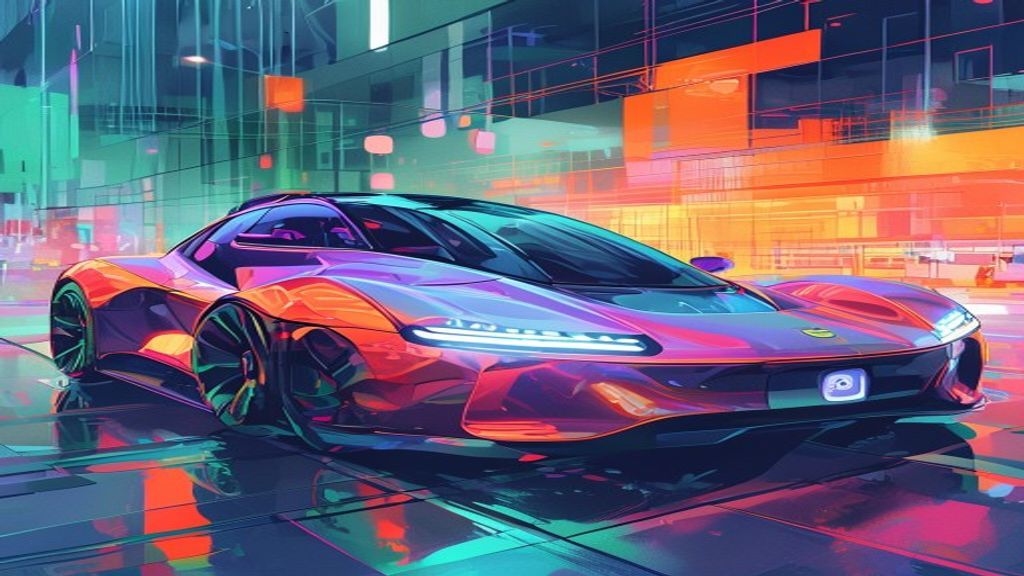
Apple never sold a single self-driving car. It never even came close. But the doomed project may have quietly handed Apple one of its most valuable competitive advantages in the AI era — and nobody really noticed until now.
Here's the twist: when Apple's engineers started seriously thinking about what a self-driving vehicle would actually need under the hood, they ran headfirst into a hard problem. Real-time AI processing — the kind that keeps a two-ton vehicle from making fatal decisions — couldn't rely on the cloud. It had to happen on-device, instantly, without waiting for a server ping. So Apple's chip team got to work building something that could do exactly that. The car never shipped, but the silicon philosophy behind it did.
That work eventually became the Neural Engine, which quietly debuted inside the A11 Bionic chip in the iPhone X back in 2017. At launch, most people thought of it as the thing powering Face ID and those goofy Animoji. Fair enough. But Apple was playing a longer game. The Neural Engine was a foundational bet that on-device AI processing would eventually matter enormously — a bet that looks a lot smarter now than it did then.
When Apple made the jump to its own Mac chips with the M-series lineup, the Neural Engine came along for the ride. That decision gave Apple something its competitors are still scrambling to replicate: a coherent story about AI that doesn't require sending your personal data to a data center in Virginia. It's a genuine privacy advantage, not just a marketing talking point.
The software side of Apple Intelligence has been, to put it charitably, a work in progress. Siri remains the butt of jokes, and the company's generative AI rollout has felt cautious to the point of timid. But the hardware underneath? That part has been legitimately impressive, and it's increasingly where Apple is placing its chips — pun intended.
According to Bloomberg's Mark Gurman, Apple is now doubling down on that hardware edge in a significant way. The company is reportedly skipping the Pro, Max, and Ultra variants of the upcoming M6 chip entirely and fast-tracking development of the M7, expected to land sometime in the first half of 2027. The M7 Ultra is the one to watch: it's projected to support up to 1.5 terabytes of unified memory, which is a staggering number that puts it squarely in server territory.
That server angle is deliberate. Apple is reportedly planning a new server product built around the M7 Ultra, which would let it run more powerful AI models in its own data centers while keeping its privacy-forward architecture intact. For a company that has always been squeamish about the cloud, building its own AI server infrastructure is a significant philosophical shift.
The irony here is pretty rich. Apple spent years and reportedly billions of dollars trying to build a car that never existed. What it got instead was a chip architecture that could define its next decade. Sometimes the best products come from the projects that never ship.
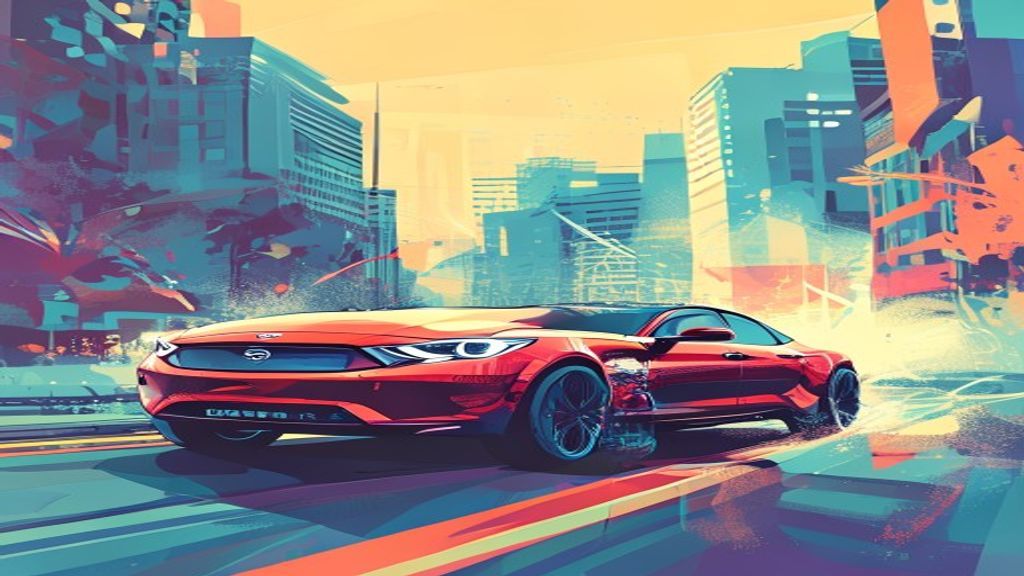
POLICY
Uber Is Quietly Lobbying to Slow Down Rival Self-Driving Cars
Uber wants you to believe it loves autonomous vehicles. It has deals with more than 25 robotaxi companies. Waymo rides are bookable through the Uber app. The CEO talks about becoming the universal platform for all things mobility, human or robotic. It's a clean, futurist-friendly narrative.
Behind the scenes, though, Uber's lobbyists have been pushing legislation that would make life considerably harder for the very robotaxi companies Uber claims to embrace. According to documents reviewed by WIRED, Uber representatives have been circulating legislative language in New Jersey that would require any ride-hail platform offering driverless services to fulfill 85 percent of its rides using human drivers — for a mandatory three-year period.
Read that again slowly. A company that built its entire business on displacing traditional taxi drivers is now lobbying to protect human drivers. The motivation here isn't altruism. That 85 percent threshold would effectively prevent Waymo, Zoox, Tesla, and others from launching their own standalone robotaxi apps in New Jersey. If you want to operate in the state, you'd essentially be forced onto an existing ride-hail platform — and there's one obvious candidate for that role.
This is a genuinely clever piece of regulatory strategy. Uber has already decided it doesn't want to build its own self-driving cars. That's an expensive, technically brutal problem, and the company learned its lesson after its early autonomous vehicle program ended in tragedy and legal chaos. Instead, Uber's bet is that it can become the distribution layer — the app that connects riders to whatever vehicle shows up, driverless or not. It's the platform play, not the hardware play.
The problem with that strategy is it only works if autonomous vehicle companies actually need Uber's platform. If Waymo can build its own app, grow its own user base, and operate independently in city after city, Uber eventually becomes optional. Lobbying to require hybrid networks — where robots and human drivers must coexist on the same platform — keeps Uber in the equation indefinitely.
The New Jersey bill is notable for another reason: it's reportedly the first proposed legislation in the country that would specifically restrict Tesla's robotaxi ambitions. The bill would require autonomous vehicles to use multiple sensor types, which would disqualify Tesla's camera-only approach. It also mandates traditional steering wheels and brake pedals, which would rule out purpose-built robotaxis like Zoox's capsule-style vehicles.
Uber has been running similar plays in Washington, DC, where a separate fight over robotaxi operating rights has been grinding on for months. The company's fingerprints keep appearing in regulatory processes across multiple states, always pushing variations of the same theme: slow the transition, keep humans in the loop, and make sure any autonomous vehicle operator needs a platform partner to reach customers.
None of this is necessarily illegal, and lobbying is how policy gets made. But it does complicate Uber's public positioning as an enthusiastic partner to the autonomous vehicle industry. You can be both things at once — a partner and a competitor — but it's worth being clear-eyed about which one is doing the driving.
Source: WIRED
Behind the scenes, though, Uber's lobbyists have been pushing legislation that would make life considerably harder for the very robotaxi companies Uber claims to embrace. According to documents reviewed by WIRED, Uber representatives have been circulating legislative language in New Jersey that would require any ride-hail platform offering driverless services to fulfill 85 percent of its rides using human drivers — for a mandatory three-year period.
Read that again slowly. A company that built its entire business on displacing traditional taxi drivers is now lobbying to protect human drivers. The motivation here isn't altruism. That 85 percent threshold would effectively prevent Waymo, Zoox, Tesla, and others from launching their own standalone robotaxi apps in New Jersey. If you want to operate in the state, you'd essentially be forced onto an existing ride-hail platform — and there's one obvious candidate for that role.
This is a genuinely clever piece of regulatory strategy. Uber has already decided it doesn't want to build its own self-driving cars. That's an expensive, technically brutal problem, and the company learned its lesson after its early autonomous vehicle program ended in tragedy and legal chaos. Instead, Uber's bet is that it can become the distribution layer — the app that connects riders to whatever vehicle shows up, driverless or not. It's the platform play, not the hardware play.
The problem with that strategy is it only works if autonomous vehicle companies actually need Uber's platform. If Waymo can build its own app, grow its own user base, and operate independently in city after city, Uber eventually becomes optional. Lobbying to require hybrid networks — where robots and human drivers must coexist on the same platform — keeps Uber in the equation indefinitely.
The New Jersey bill is notable for another reason: it's reportedly the first proposed legislation in the country that would specifically restrict Tesla's robotaxi ambitions. The bill would require autonomous vehicles to use multiple sensor types, which would disqualify Tesla's camera-only approach. It also mandates traditional steering wheels and brake pedals, which would rule out purpose-built robotaxis like Zoox's capsule-style vehicles.
Uber has been running similar plays in Washington, DC, where a separate fight over robotaxi operating rights has been grinding on for months. The company's fingerprints keep appearing in regulatory processes across multiple states, always pushing variations of the same theme: slow the transition, keep humans in the loop, and make sure any autonomous vehicle operator needs a platform partner to reach customers.
None of this is necessarily illegal, and lobbying is how policy gets made. But it does complicate Uber's public positioning as an enthusiastic partner to the autonomous vehicle industry. You can be both things at once — a partner and a competitor — but it's worth being clear-eyed about which one is doing the driving.
Enjoyed this?
Get stories like this delivered every Tuesday — free.