
OpenAI allegedly told job candidates to bring Apple prototypes to their interviews. That single detail, buried in Apple's new lawsuit, tells you almost everything you need to know about how aggressive this alleged operation was.
Apple has filed suit against OpenAI, Jony Ive's hardware company IO Products (which OpenAI acquired earlier this year), and two named individuals: Tang Tan, OpenAI's chief hardware officer, and Chang Liu, who left Apple for OpenAI in January. The core allegation is that Apple has uncovered a coordinated, deliberate campaign to drain its hardware division of confidential information — not a few files accidentally carried out the door, but a systematic effort spanning multiple employees and months.
The Liu allegations are particularly eyebrow-raising. Apple claims he accessed company systems after his employment ended and downloaded dozens of confidential files covering unreleased products, technical specifications, and engineering presentations. That alone would be serious. But Apple also says Liu coached a former colleague on how to copy confidential files and dodge the company's internal security systems before she made the same jump to OpenAI. Their preferred communication method, according to the suit: Line Messenger, presumably because it's less likely to surface in a corporate audit.
The Tan allegations paint a picture of someone who treated Apple's supplier relationships and internal knowledge as personal intellectual property to carry out the door. Apple says he emailed himself confidential supplier information before leaving and later used his access to Apple insiders — people he was interviewing for OpenAI roles — to extract proprietary details. The lawsuit describes this not as opportunism but as a deliberate, methodical pattern.
Why does this matter beyond the drama of two tech giants going to court? Because it lands at a genuinely sensitive moment for OpenAI. The company is trying to build a hardware business for the first time, and the IO Products acquisition — essentially bringing Jony Ive into the fold — was the clearest signal yet of how seriously it's chasing that ambition. If Apple can demonstrate in court that OpenAI's hardware roadmap was built on stolen foundations, that's not just a legal problem. It's a credibility problem at exactly the moment OpenAI needs investors, partners, and the public to trust its new direction.
OpenAI's public response has been brief and predictably denial-shaped, saying the company has no interest in anyone else's trade secrets. Apple, for its part, is clearly not interested in settling quietly. The language in its complaint — "systematic effort," "pattern of theft" — reads like a company that wants this fight in the open.
For anyone watching the AI hardware race, this case is now a critical subplot. The outcome could shape what OpenAI's device ambitions actually look like, and whether the people who built those plans are still around to execute them.
SECURITY
Ransomware Negotiator Secretly Worked for the Attackers He Represented
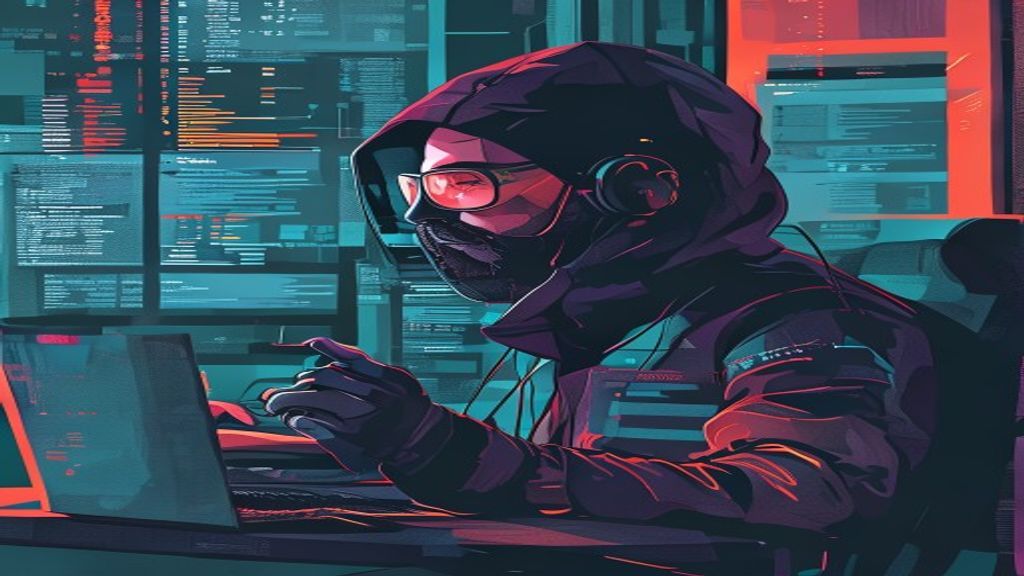
Five companies paid more than $75 million in ransoms while the person they hired to protect them was actively feeding information to the attackers. That is not a plot hole in a thriller. That is what happened.
Angelo Martino, a ransomware negotiator who worked for a company called DigitalMint, was sentenced this week to 70 months in federal prison after pleading guilty to conspiring with the BlackCat ransomware group to extort the very clients he was supposed to help. His job was to sit across the table from cybercriminals and negotiate ransoms down. Instead, he was slipping those criminals confidential details about his clients' negotiating positions so they could drive the price up — and taking a cut of the inflated payments for himself.
The ransom payments from his five victims ranged from $213,000 on the low end to a staggering $26.8 million at the top. Martino collected his proceeds in cryptocurrency, and by the time the FBI caught up with him, he had already converted a significant chunk of it into two houses in Florida, a boat, and multiple vehicles. The government is now requiring him to forfeit property and hand over 10 percent of his post-release income to compensate victims.
Martino wasn't operating alone. Two colleagues were also charged: Kevin Martin, another DigitalMint negotiator, and Ryan Goldberg, an incident manager at cybersecurity firm Sygnia. Both were sentenced to four years in prison earlier this year. Martino tried to leverage his cooperation with prosecutors against Martin and Goldberg to argue for a shorter sentence — he asked for 24 months. The judge gave him nearly three times that.
The victim list includes companies across hospitality, finance, retail, healthcare, and the nonprofit sector. Beyond the financial damage, prosecutors noted that some of these organizations had their ability to serve customers meaningfully disrupted during the scheme, which ran from April to September 2023. A medical company and a financial services firm being locked out of operations is not an abstract harm.
This case exposes a real structural vulnerability in how organizations respond to ransomware attacks. When you hire a negotiator, you are sharing your pain points: how much the attack has cost you in downtime, what your upper limit might be, how desperate you are. That information is only useful if it stays confidential. Martino turned that trust into a business model.
The ransomware negotiation industry is largely unregulated, and this case is the most dramatic illustration yet of why that might be a problem. Companies under attack are already in a vulnerable position. They should not have to also worry about whether the person they brought in to help is texting the other side.
Source: Ars Technica
Angelo Martino, a ransomware negotiator who worked for a company called DigitalMint, was sentenced this week to 70 months in federal prison after pleading guilty to conspiring with the BlackCat ransomware group to extort the very clients he was supposed to help. His job was to sit across the table from cybercriminals and negotiate ransoms down. Instead, he was slipping those criminals confidential details about his clients' negotiating positions so they could drive the price up — and taking a cut of the inflated payments for himself.
The ransom payments from his five victims ranged from $213,000 on the low end to a staggering $26.8 million at the top. Martino collected his proceeds in cryptocurrency, and by the time the FBI caught up with him, he had already converted a significant chunk of it into two houses in Florida, a boat, and multiple vehicles. The government is now requiring him to forfeit property and hand over 10 percent of his post-release income to compensate victims.
Martino wasn't operating alone. Two colleagues were also charged: Kevin Martin, another DigitalMint negotiator, and Ryan Goldberg, an incident manager at cybersecurity firm Sygnia. Both were sentenced to four years in prison earlier this year. Martino tried to leverage his cooperation with prosecutors against Martin and Goldberg to argue for a shorter sentence — he asked for 24 months. The judge gave him nearly three times that.
The victim list includes companies across hospitality, finance, retail, healthcare, and the nonprofit sector. Beyond the financial damage, prosecutors noted that some of these organizations had their ability to serve customers meaningfully disrupted during the scheme, which ran from April to September 2023. A medical company and a financial services firm being locked out of operations is not an abstract harm.
This case exposes a real structural vulnerability in how organizations respond to ransomware attacks. When you hire a negotiator, you are sharing your pain points: how much the attack has cost you in downtime, what your upper limit might be, how desperate you are. That information is only useful if it stays confidential. Martino turned that trust into a business model.
The ransomware negotiation industry is largely unregulated, and this case is the most dramatic illustration yet of why that might be a problem. Companies under attack are already in a vulnerable position. They should not have to also worry about whether the person they brought in to help is texting the other side.
Enjoyed this?
Get stories like this delivered every Tuesday — free.