
Here is a company valued at roughly $60 billion that just decided its best move before a landmark IPO is to charge you less. Anthropic's newly released Claude Sonnet 5 is priced at a significant discount to Claude Opus, its most powerful model, and the timing is anything but accidental.
The strategy makes a certain kind of sense when you zoom out. Anthropic is in a land-grab moment. OpenAI owns the consumer mindshare, Google has the distribution, and Meta is giving models away for free. If Anthropic wants to grow its developer and enterprise base fast enough to justify its valuation on the public markets, it needs people actually building with its technology — not just admiring it from afar.
Sonnet 5 is positioned as the sweet spot: capable enough to handle serious workloads, affordable enough that startups and mid-sized companies will not flinch at the API bills. Anthropic has always leaned into the idea that it is the responsible, safety-conscious alternative in the AI race. But responsible does not pay the bills — adoption does.
What makes this launch interesting is what it signals about Anthropic's product philosophy going forward. Rather than a single flagship model that dominates everything, the company appears to be building out a tiered lineup that mirrors how developers actually think about cost versus performance tradeoffs. You do not use a sledgehammer to crack a nut, and you do not call Claude Opus every time someone needs a summary of a meeting transcript.
The IPO backdrop adds real pressure to all of this. Anthropic has raised billions from Amazon and Google, among others, and investors are going to want to see revenue curves that justify the hype. A cheaper, highly capable model that drives volume could be a smarter path to those numbers than holding the line on premium pricing and watching potential customers defect to cheaper alternatives.
There is also the competitive reality of what OpenAI has been doing with its own model tiering. GPT-4o and the o-series models have given developers a clearer menu of options, and Anthropic needed a sharper answer to that. Sonnet 5 looks like that answer.
The open question is whether discounting your way to growth is a sustainable strategy for a company still burning significant capital on research and safety infrastructure. Anthropic has always insisted that the two goals — building a commercially successful AI company and building a safe one — are not in conflict. Sonnet 5 is essentially a public test of that thesis.
If it drives the kind of adoption that makes the IPO roadshow a compelling story, Anthropic will have pulled off something genuinely impressive. If margins suffer and the growth does not materialize fast enough, critics will say the company blinked in a market that rewards boldness.
SPACE
NASA Eyes Nuclear-Powered Mars Rover Deployment on the Moon
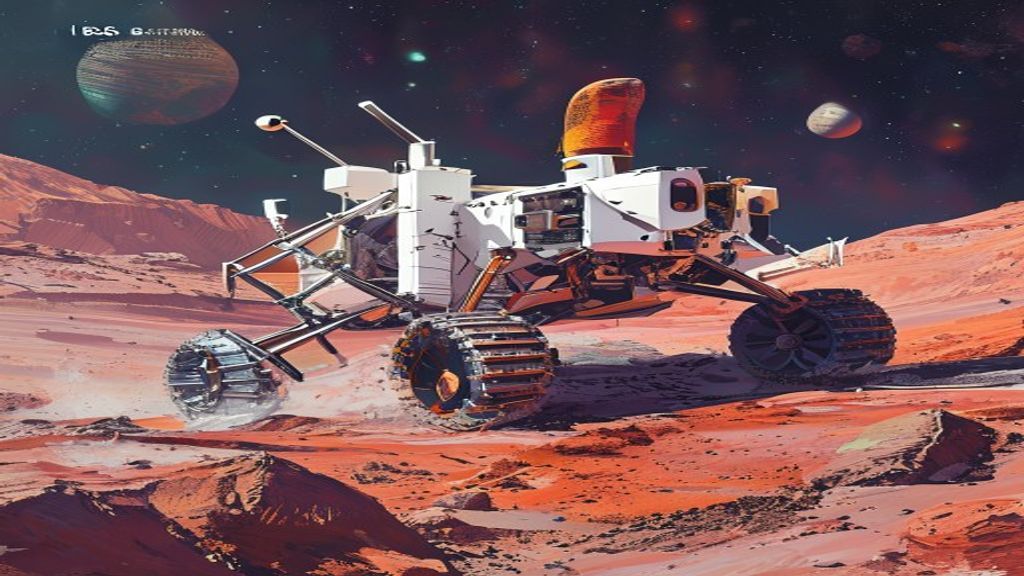
There is a full-scale, car-sized Mars rover sitting in a laboratory in California that has never left Earth, and NASA is now seriously asking whether it should send it to the Moon instead. That is not a thought experiment. It is an active conversation happening at the highest levels of the agency.
The rover in question is nicknamed Promise. It is the engineering twin of Perseverance, the rover currently crawling around Mars, and it has spent years at the Jet Propulsion Laboratory serving as a testbed. When mission controllers want to try a tricky maneuver before sending the command across tens of millions of miles of space, they run it on Promise first. It has been an invaluable tool. It has also never had a destination of its own — until possibly now.
What makes this idea genuinely exciting is the power source. Promise would go to the Moon equipped with a multi-mission radioisotope thermoelectric generator, a nuclear power system that runs on decaying Plutonium-238. NASA already has one of these sitting around, with the plutonium slowly losing its potency and not being used for anything. Sending it to the Moon would put that investment to work before it degrades further.
The practical upside of nuclear power on the Moon is enormous. Most lunar hardware runs on solar panels, which means it goes dark during the lunar night — a brutal two-week stretch of total darkness that has killed multiple missions. A nuclear-powered rover does not care about sunlight. It can keep moving through the night and push into the permanently shadowed craters near the lunar south pole, which are among the most scientifically valuable and logistically challenging places on the Moon.
NASA Administrator Jared Isaacman framed it plainly during a recent agency update: taxpayers have already paid for this hardware, the experience operating Perseverance and Curiosity on Mars has reduced the need for a ground-based testbed, and there is a real lunar exploration program that could use exactly this kind of capability. The logic is hard to argue with.
The engineering challenges are real but not insurmountable. Promise was built for Mars, not the Moon. The gravitational environment, surface composition, and scientific targets are all different. JPL engineers have said the rover could be modified, and the instrument suite would need to be swapped out for tools better suited to lunar science.
Delivery is its own puzzle. At roughly one metric ton, Promise is too heavy for most current lunar landers. It would likely require either Blue Origin's Blue Moon lander or SpaceX's Starship, both of which are central to NASA's broader lunar infrastructure plans anyway.
This is the kind of creative, hardware-forward thinking that NASA does well when it is operating with a clear mission and some urgency. Sending a Mars rover to the Moon sounds like science fiction, but the pieces are already on the shelf.
Source: Ars Technica
The rover in question is nicknamed Promise. It is the engineering twin of Perseverance, the rover currently crawling around Mars, and it has spent years at the Jet Propulsion Laboratory serving as a testbed. When mission controllers want to try a tricky maneuver before sending the command across tens of millions of miles of space, they run it on Promise first. It has been an invaluable tool. It has also never had a destination of its own — until possibly now.
What makes this idea genuinely exciting is the power source. Promise would go to the Moon equipped with a multi-mission radioisotope thermoelectric generator, a nuclear power system that runs on decaying Plutonium-238. NASA already has one of these sitting around, with the plutonium slowly losing its potency and not being used for anything. Sending it to the Moon would put that investment to work before it degrades further.
The practical upside of nuclear power on the Moon is enormous. Most lunar hardware runs on solar panels, which means it goes dark during the lunar night — a brutal two-week stretch of total darkness that has killed multiple missions. A nuclear-powered rover does not care about sunlight. It can keep moving through the night and push into the permanently shadowed craters near the lunar south pole, which are among the most scientifically valuable and logistically challenging places on the Moon.
NASA Administrator Jared Isaacman framed it plainly during a recent agency update: taxpayers have already paid for this hardware, the experience operating Perseverance and Curiosity on Mars has reduced the need for a ground-based testbed, and there is a real lunar exploration program that could use exactly this kind of capability. The logic is hard to argue with.
The engineering challenges are real but not insurmountable. Promise was built for Mars, not the Moon. The gravitational environment, surface composition, and scientific targets are all different. JPL engineers have said the rover could be modified, and the instrument suite would need to be swapped out for tools better suited to lunar science.
Delivery is its own puzzle. At roughly one metric ton, Promise is too heavy for most current lunar landers. It would likely require either Blue Origin's Blue Moon lander or SpaceX's Starship, both of which are central to NASA's broader lunar infrastructure plans anyway.
This is the kind of creative, hardware-forward thinking that NASA does well when it is operating with a clear mission and some urgency. Sending a Mars rover to the Moon sounds like science fiction, but the pieces are already on the shelf.
Enjoyed this?
Get stories like this delivered every Tuesday — free.