
Here's the number that should make you put down your coffee: Apple's estimated profit margin on the iPhone 17 Pro may be as high as 47 percent. That's nearly double what most smartphone makers clear. And yet, Tim Cook is asking you to pay more.
Apple recently raised prices across a swath of its product lineup. The 16-inch MacBook Pro jumped $300. The iPad Air's entry price leapt from $599 to $749. Even the HomePod Mini, a product that was already a tough sell at $99, now costs $129. Cook's explanation? AI infrastructure costs have made current pricing "unsustainable." The implication being that this isn't really Apple's fault — it's the industry's.
There's a real phenomenon underneath that talking point, and it's worth understanding. As hyperscalers like Microsoft, Google, and OpenAI have poured hundreds of billions into building out AI data centers, they've created a massive demand spike for a specific type of memory chip called HBM, or high-bandwidth memory. Memory manufacturers, smelling bigger margins, have quietly shifted their production lines away from the consumer-grade RAM that goes into laptops and tablets. Less supply, same or growing demand — prices go up. This is what some in the industry have started calling RAMageddon, and it's already hit Xbox consoles and even caused a phone launch to be scrapped entirely.
The economics are fairly straightforward. A memory chip crammed into an AI server generates far more revenue for its manufacturer than the same chip sitting inside a MacBook. So companies like Micron are making record profits, chipmakers are happy, and consumers are left holding a more expensive receipt. Researchers at NYU's Stern School of Business suggest this shortage isn't a blip — it could stretch several years, making it genuinely difficult for any hardware company to just absorb the difference indefinitely.
But here's where the sympathy starts to run thin for Apple specifically. The company has posted record earnings for at least four consecutive quarters. Its hardware margins — estimated between 30 and 40 percent depending on the product — already sit well above industry norms of 10 to 25 percent for laptops and 15 to 25 percent for phones. Apple isn't some scrappy manufacturer working on razor-thin margins. It's one of the most profitable companies in the history of capitalism.
None of this is to say component cost increases aren't real. They absolutely are, and every company building physical hardware is navigating the same pressures. But there's a meaningful difference between "our costs went up" and "our costs went up and we have no cushion to absorb any of it." Apple is clearly in the first camp, not the second.
What makes this particularly interesting is that Apple was actually one of the last major tech companies to move on pricing. Which could mean one of two things: either it held out as long as it reasonably could, or it waited to see whether consumers would push back on competitors first. Given Apple's track record of watching how markets react before making big moves, the latter interpretation isn't exactly far-fetched.
The broader story here is that the AI buildout — a spending spree that benefits a relatively small number of enterprise customers and tech insiders — is quietly being subsidized by ordinary people buying tablets and laptops. Nobody voted for that arrangement.
ROBOTICS
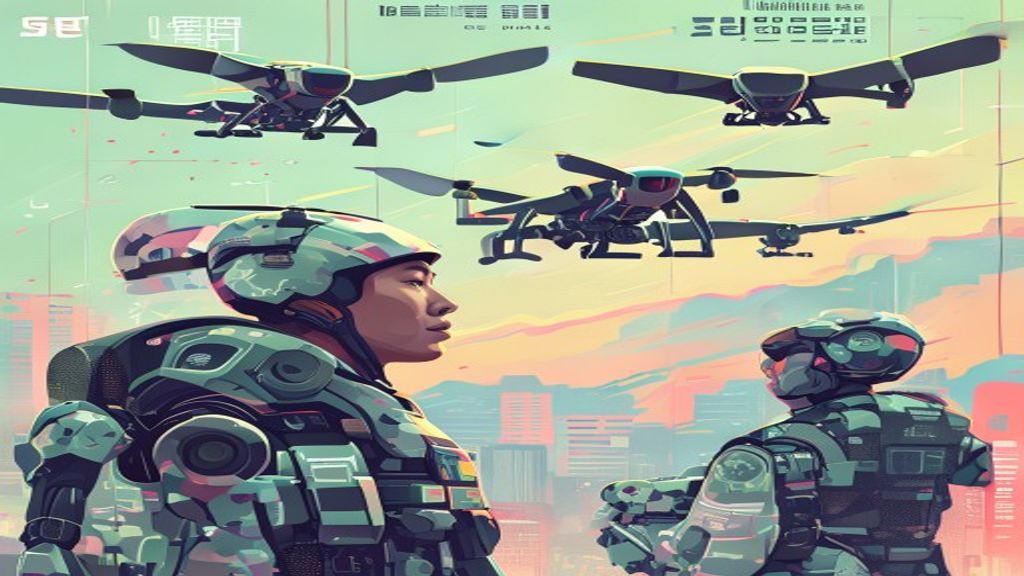
South Korea Plans to Transform Entire 500,000-Strong Military Into Drone Warriors
South Korea wants every single one of its roughly 450,000 active-duty soldiers to be able to fly a drone the same way they handle a rifle. Not a specialized unit. Not an elite corps. Every soldier, as a baseline expectation. That is a genuinely radical rethink of what a modern infantry force looks like.
South Korea's Defense Minister announced the initiative in late June, framing drones as a future "universal combat tool" — a second personal weapon rather than a niche capability reserved for dedicated operators. The announcement came alongside plans to push more cheap, expendable drones into individual unit inventories for both surveillance and strike roles, while also expanding counter-drone defenses like laser and microwave-based systems.
The strategic logic is not hard to follow. South Korea faces a stubborn numerical problem: its active military of roughly 450,000 troops is staring across the border at a North Korean force of more than 1.2 million. That gap isn't closing anytime soon. But Ukraine's experience fighting a larger Russian military has shown the world something important — drones can be a serious equalizer when deployed at scale by well-trained soldiers. South Korea is paying close attention, and the parallels to its own situation are obvious.
The reorganization goes further than just training. South Korea's existing drone command structure, which previously held direct authority over combat units, is being restructured into more of an industry collaboration and procurement body. The idea is to move faster on integrating commercial drone technology rather than getting bogged down in traditional military procurement timelines.
There are, however, some real constraints that complicate the vision. South Korea's conscript-based military has been quietly shrinking, driven by one of the lowest birth rates in the developed world. The country may actually struggle to maintain a force of 500,000 troops at all, let alone equip all of them with drone proficiency — particularly while mandatory military service remains limited to men.
The hardware rollout is also slower than the headline suggests. South Korea isn't handing every soldier a drone tomorrow. The military is starting with 11,000 training drones this year, with an ambitious target of 60,000 deployed units across the force by 2029. That's a real program, but it's a long way from universal capability.
There's also a supply chain wrinkle. South Korea wants its military drones built with fully domestic components and zero Chinese parts — a reasonable security concern given that China is North Korea's primary economic backer. But building a drone supply chain that scales to tens of thousands of units while excluding the world's dominant drone component manufacturer is genuinely hard. It's a constraint that could slow procurement and drive up costs significantly.
What South Korea is attempting is essentially a doctrine shift, not just a procurement decision. The bet is that a smaller, drone-literate force can punch well above its weight. Ukraine's battlefield has made that argument more credible than it's ever been.
Source: Ars Technica
South Korea's Defense Minister announced the initiative in late June, framing drones as a future "universal combat tool" — a second personal weapon rather than a niche capability reserved for dedicated operators. The announcement came alongside plans to push more cheap, expendable drones into individual unit inventories for both surveillance and strike roles, while also expanding counter-drone defenses like laser and microwave-based systems.
The strategic logic is not hard to follow. South Korea faces a stubborn numerical problem: its active military of roughly 450,000 troops is staring across the border at a North Korean force of more than 1.2 million. That gap isn't closing anytime soon. But Ukraine's experience fighting a larger Russian military has shown the world something important — drones can be a serious equalizer when deployed at scale by well-trained soldiers. South Korea is paying close attention, and the parallels to its own situation are obvious.
The reorganization goes further than just training. South Korea's existing drone command structure, which previously held direct authority over combat units, is being restructured into more of an industry collaboration and procurement body. The idea is to move faster on integrating commercial drone technology rather than getting bogged down in traditional military procurement timelines.
There are, however, some real constraints that complicate the vision. South Korea's conscript-based military has been quietly shrinking, driven by one of the lowest birth rates in the developed world. The country may actually struggle to maintain a force of 500,000 troops at all, let alone equip all of them with drone proficiency — particularly while mandatory military service remains limited to men.
The hardware rollout is also slower than the headline suggests. South Korea isn't handing every soldier a drone tomorrow. The military is starting with 11,000 training drones this year, with an ambitious target of 60,000 deployed units across the force by 2029. That's a real program, but it's a long way from universal capability.
There's also a supply chain wrinkle. South Korea wants its military drones built with fully domestic components and zero Chinese parts — a reasonable security concern given that China is North Korea's primary economic backer. But building a drone supply chain that scales to tens of thousands of units while excluding the world's dominant drone component manufacturer is genuinely hard. It's a constraint that could slow procurement and drive up costs significantly.
What South Korea is attempting is essentially a doctrine shift, not just a procurement decision. The bet is that a smaller, drone-literate force can punch well above its weight. Ukraine's battlefield has made that argument more credible than it's ever been.
Enjoyed this?
Get stories like this delivered every Tuesday — free.