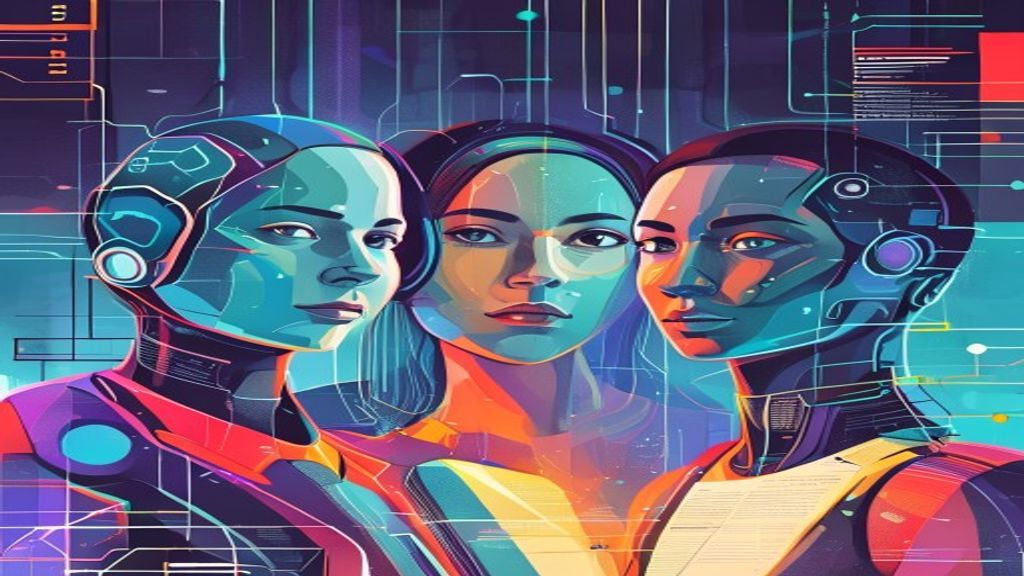
OpenAI did not send a press release. There was no Sam Altman tweet thread, no livestream, no countdown timer. The company just quietly surfaced a new family of models — GPT-5.6, split into three distinct variants — and made them available only to a small group of preview partners. If you blinked, you missed it.
The three models, named Sol, Terra, and Luna, are each tuned for different use cases rather than being general-purpose powerhouses. That's a meaningful shift in how OpenAI is packaging its technology. Instead of one model that tries to do everything adequately, the company appears to be moving toward specialized tools that do specific things exceptionally well. Think of it less like a Swiss Army knife and more like an actual knife set.
This kind of tiered, specialized architecture has been the quiet obsession of enterprise AI buyers for months. General-purpose models are impressive in demos but often overkill — and expensive to run — for narrow, repeatable business tasks. A model optimized for, say, document analysis or code generation can be faster, cheaper, and more accurate than a flagship model asked to do the same thing. OpenAI seems to be acknowledging that reality.
The limited preview rollout is also worth paying attention to. OpenAI isn't releasing these to the public yet, which suggests the company is either still stress-testing performance, calibrating pricing, or both. It also gives OpenAI a chance to gather structured feedback from vetted partners before the inevitable flood of edge cases that comes with a broad launch.
For context, this release comes as competition in the foundation model space has gotten genuinely ferocious. Anthropic's Claude family, Google's Gemini lineup, and a growing roster of open-weight models from Meta and others have all forced OpenAI to think harder about differentiation. Releasing a monolithic GPT-6 and calling it a day is no longer a winning strategy when competitors are shipping fast and often.
The naming convention — Sol, Terra, Luna — is celestial and vague enough to tell us almost nothing about the models' actual capabilities, which is a very OpenAI move. The company has historically been cagey about technical details, and that hasn't changed here. What we do know is that the specialization strategy implies OpenAI has done enough internal benchmarking to believe these models outperform generalist alternatives on their target tasks.
The bigger question is whether specialized models will become the new standard across the industry, or whether scaling laws will eventually produce general models so capable that specialization becomes irrelevant. For now, OpenAI is betting on the former — and doing it with the kind of low-key launch that suggests they're not ready to make too much noise just yet.
POLICY
Apple Blocks Russian Apps, Government Tells Citizens to Ditch iPhones
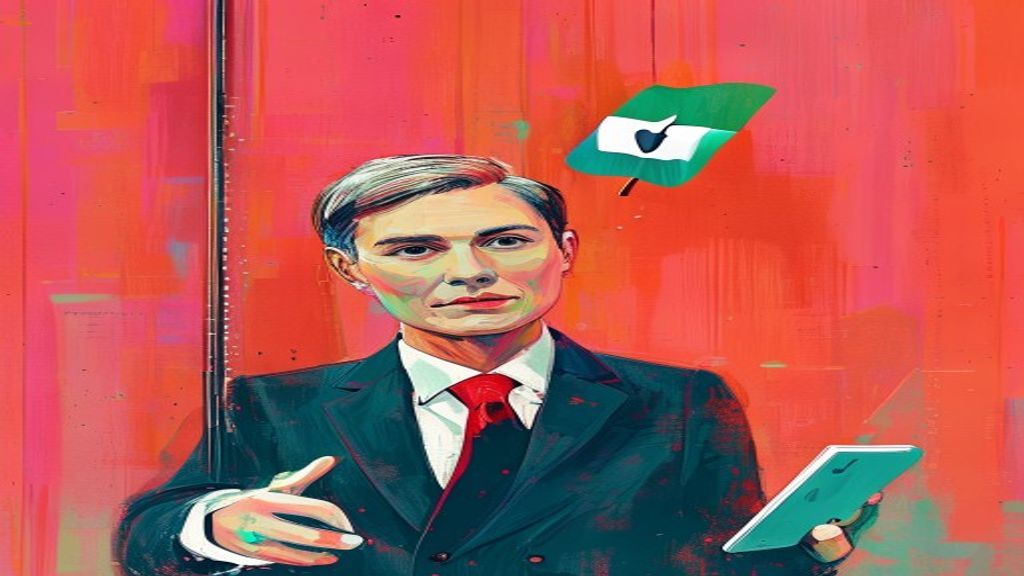
Russia asked Apple to remove 1,213 apps from its App Store in 2025 alone — more than any other country on earth, and nearly four times the requests made by second-place Vietnam. The bitter irony is that now Apple has turned around and blocked two of Russia's own flagship apps, and the Kremlin has no idea what to do about it.
The two apps in question are VKontakte, Russia's dominant social network and a rough functional equivalent to Facebook, and Max, a state-linked messaging platform that security researchers have described as a surveillance apparatus barely disguised as a chat app. Apple pulled Max from the App Store in early June, followed by VKontakte on June 25. Existing installs still work, but Apple has cut off push notifications — which is a bit like leaving the lights on in a store while locking all the doors. Technically open, practically useless.
VK Group, the company behind both apps, came out swinging. The company issued a formal statement arguing that it has never been placed on any sanctions list and that Apple had legal documentation confirming as much. It called the removals unjustified and unacceptable, and pointedly noted that its Android apps remain fully functional across Google Play, Huawei AppGallery, and several other platforms. The subtext was clear: this is Apple's problem, not ours.
The Kremlin's response has been a masterclass in impotent frustration. Spokesperson Dmitry Peskov demanded an explanation from Apple, questioned whether the company could be trusted as a commercial service provider, and described its recent decisions as, in his own diplomatic phrasing, bizarre. None of that changes anything, of course. Apple isn't subject to Russian regulatory pressure in any meaningful way, and the company has shown no signs of reversing course.
So Peskov landed on the only advice he actually had available: switch to Android. It's a remarkable moment — the official spokesperson for one of the world's most powerful governments telling its citizens to abandon a product because the government can't control the company that makes it.
The deeper story here is about Russia's long-running and deeply contradictory relationship with the global tech ecosystem. The country has spent years trying to build a sovereign internet — blocking foreign platforms, mandating domestic alternatives, and pressuring companies like Apple into compliance. But the infrastructure of daily digital life in Russia still runs on Western hardware and platforms. When Apple pulls a lever, Russia feels it immediately.
For Russian iPhone users, the practical fallout is real but manageable in the short term. For the Kremlin, the episode is an embarrassing reminder that sovereignty over your citizens' smartphones is harder to legislate than sovereignty over territory. Apple, for its part, has said nothing publicly — which, given the circumstances, is probably exactly where it wants to be.
Source: Ars Technica
The two apps in question are VKontakte, Russia's dominant social network and a rough functional equivalent to Facebook, and Max, a state-linked messaging platform that security researchers have described as a surveillance apparatus barely disguised as a chat app. Apple pulled Max from the App Store in early June, followed by VKontakte on June 25. Existing installs still work, but Apple has cut off push notifications — which is a bit like leaving the lights on in a store while locking all the doors. Technically open, practically useless.
VK Group, the company behind both apps, came out swinging. The company issued a formal statement arguing that it has never been placed on any sanctions list and that Apple had legal documentation confirming as much. It called the removals unjustified and unacceptable, and pointedly noted that its Android apps remain fully functional across Google Play, Huawei AppGallery, and several other platforms. The subtext was clear: this is Apple's problem, not ours.
The Kremlin's response has been a masterclass in impotent frustration. Spokesperson Dmitry Peskov demanded an explanation from Apple, questioned whether the company could be trusted as a commercial service provider, and described its recent decisions as, in his own diplomatic phrasing, bizarre. None of that changes anything, of course. Apple isn't subject to Russian regulatory pressure in any meaningful way, and the company has shown no signs of reversing course.
So Peskov landed on the only advice he actually had available: switch to Android. It's a remarkable moment — the official spokesperson for one of the world's most powerful governments telling its citizens to abandon a product because the government can't control the company that makes it.
The deeper story here is about Russia's long-running and deeply contradictory relationship with the global tech ecosystem. The country has spent years trying to build a sovereign internet — blocking foreign platforms, mandating domestic alternatives, and pressuring companies like Apple into compliance. But the infrastructure of daily digital life in Russia still runs on Western hardware and platforms. When Apple pulls a lever, Russia feels it immediately.
For Russian iPhone users, the practical fallout is real but manageable in the short term. For the Kremlin, the episode is an embarrassing reminder that sovereignty over your citizens' smartphones is harder to legislate than sovereignty over territory. Apple, for its part, has said nothing publicly — which, given the circumstances, is probably exactly where it wants to be.
Enjoyed this?
Get stories like this delivered every Tuesday — free.