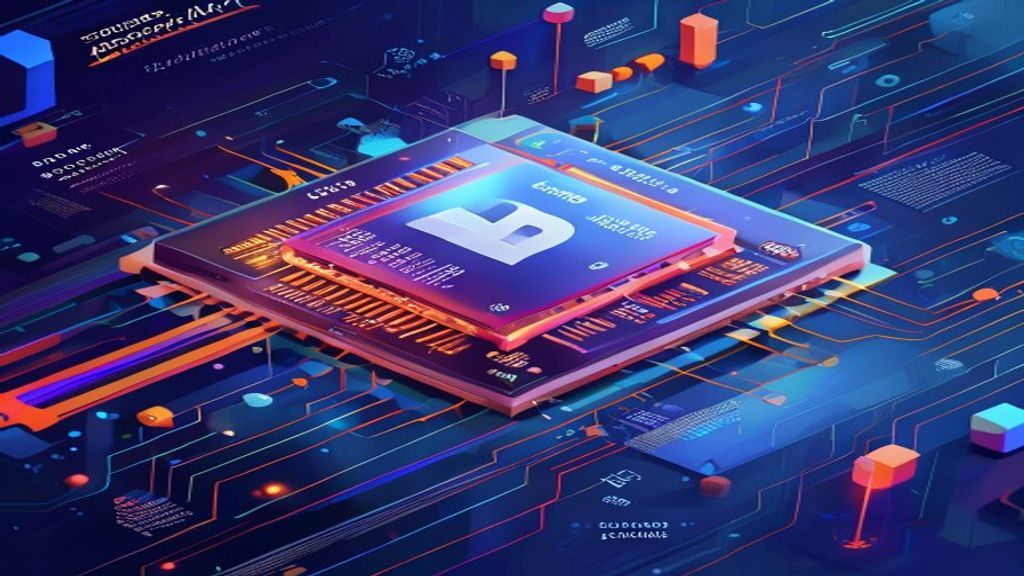
Here is a number worth sitting with: IBM's newest chip architecture can squeeze nearly 100 billion transistors onto a piece of silicon roughly the size of your fingernail. That is almost double the transistor density of the company's previous generation, and it hints at a future where AI data centers could do dramatically more work while pulling dramatically less power from the grid.
Before you take the "sub-1 nanometer" headline at face value, it deserves a little unpacking. IBM is not claiming it has physically etched features smaller than a nanometer onto silicon — that is currently impossible due to hard limits in quantum physics. What IBM is actually saying is that its new architecture delivers the kind of performance gains you would theoretically expect from a chip built at that scale. The naming is more of a performance benchmark than a literal measurement.
The actual technology is called the nanostack architecture, and it is built at what IBM calls the 7 angstrom node — or 0.7 nanometers, since there are 10 angstroms in a nanometer. The clever bit is that instead of trying to make transistors smaller on a flat plane, IBM's engineers stacked two transistors on top of each other in a staggered vertical arrangement. It is the chip equivalent of building upward when you run out of real estate to build outward.
Each transistor in the stack is made up of three nanosheets, each one about 5 nanometers thick — roughly 15 rows of silicon atoms side by side. The sheets are separated by gaps of around 9 nanometers. It sounds impossibly delicate, and honestly, it is. This is some of the most precise manufacturing humanity has ever attempted.
This nanostack approach builds on IBM's earlier nanosheet transistor work, which underpinned its 2-nanometer chip node back in 2021. Think of nanostack as the natural next chapter of that research rather than a complete reinvention. IBM presented the architecture at the IEEE Symposium on VLSI Technology and Circuits in Kyoto last year, giving the broader semiconductor research community its first detailed look.
The performance projections are what make this genuinely exciting. IBM says the nanostack node could enable chips that are either 50 percent faster or 70 percent more energy efficient compared to its 2-nanometer generation, depending on how designers choose to optimize. For AI workloads specifically, that energy efficiency number matters enormously — training and running large models is already consuming power at a rate that is straining electrical grids worldwide.
The broader context here is that the entire chip industry has been wrestling with the question of what comes after traditional scaling. For decades, the answer was simply to make transistors smaller. That playbook is running out of pages. IBM's bet is that vertical stacking — going up instead of shrinking down — is one of the more credible paths forward. Whether this architecture makes it into commercial products at scale is a separate question, but as a proof of concept, it is a meaningful one.

GADGETS
Apple Hikes Mac and iPad Prices by Hundreds Amid Memory Shortage
The M3 Ultra Mac Studio just got $1,300 more expensive overnight. It now starts at $5,299, up from $3,999 — a price jump so large it would cover a brand new entry-level MacBook with money to spare. Apple's across-the-board price hikes landed this week, and they are a direct consequence of an AI-fueled memory shortage that is squeezing every corner of the consumer electronics market.
The increases are not limited to high-end machines. The MacBook Neo now starts at $699, up from $599. The iPad Air jumped $150. Apple CEO Tim Cook telegraphed this was coming in a Wall Street Journal interview, saying Apple had tried to shield customers from rising costs but that the situation had become "unsustainable." That is about as candid as Tim Cook gets in public.
The root cause is worth understanding because it is not going away anytime soon. AI companies are hoovering up RAM and solid-state storage at a pace that memory manufacturers simply cannot match. Samsung, SK Hynix, and Micron are all running their fabs at capacity, but demand from data center operators building out infrastructure for large language models keeps outpacing supply. When hyperscalers and consumer device makers are competing for the same pool of DRAM, consumers tend to lose.
Apple had already been quietly adjusting its lineup ahead of the formal price increases. The Mac Studio configuration with 512GB of RAM disappeared from the store in March. The $599 Mac Mini option was pulled shortly after, pushing the entry price to $799. These were early warning signs that Apple knew the cost structure was shifting and was trying to manage the transition without making a big announcement.
What makes this particularly frustrating is how broad the impact is. This is not just an Apple story. Microsoft has raised prices on Surface devices. Xbox Series S and X consoles cost more. The Nintendo Switch, PlayStation 5, Framework's modular laptops, the Meta Quest 3, and even the Raspberry Pi 5 have all seen price increases tied to the same underlying shortage. If you buy consumer electronics, you are already living with the consequences of the AI memory crunch whether you realize it or not.
The uncomfortable reality is that memory suppliers are trying to ramp up DRAM production, but new fabrication capacity takes years to build and bring online. Analysts expect the shortage to persist well into the latter half of the decade. That means consumers and device makers are both stuck playing defense for the foreseeable future.
For Apple, the price hikes risk complicating an already delicate moment. Mac and iPad sales have been inconsistent, and pushing entry prices higher is rarely a formula for growing market share. Apple is betting that its ecosystem lock-in and product differentiation can absorb the sticker shock. Given the alternatives, it may well be right — but buyers are the ones paying for that bet.
Source: The Verge
The increases are not limited to high-end machines. The MacBook Neo now starts at $699, up from $599. The iPad Air jumped $150. Apple CEO Tim Cook telegraphed this was coming in a Wall Street Journal interview, saying Apple had tried to shield customers from rising costs but that the situation had become "unsustainable." That is about as candid as Tim Cook gets in public.
The root cause is worth understanding because it is not going away anytime soon. AI companies are hoovering up RAM and solid-state storage at a pace that memory manufacturers simply cannot match. Samsung, SK Hynix, and Micron are all running their fabs at capacity, but demand from data center operators building out infrastructure for large language models keeps outpacing supply. When hyperscalers and consumer device makers are competing for the same pool of DRAM, consumers tend to lose.
Apple had already been quietly adjusting its lineup ahead of the formal price increases. The Mac Studio configuration with 512GB of RAM disappeared from the store in March. The $599 Mac Mini option was pulled shortly after, pushing the entry price to $799. These were early warning signs that Apple knew the cost structure was shifting and was trying to manage the transition without making a big announcement.
What makes this particularly frustrating is how broad the impact is. This is not just an Apple story. Microsoft has raised prices on Surface devices. Xbox Series S and X consoles cost more. The Nintendo Switch, PlayStation 5, Framework's modular laptops, the Meta Quest 3, and even the Raspberry Pi 5 have all seen price increases tied to the same underlying shortage. If you buy consumer electronics, you are already living with the consequences of the AI memory crunch whether you realize it or not.
The uncomfortable reality is that memory suppliers are trying to ramp up DRAM production, but new fabrication capacity takes years to build and bring online. Analysts expect the shortage to persist well into the latter half of the decade. That means consumers and device makers are both stuck playing defense for the foreseeable future.
For Apple, the price hikes risk complicating an already delicate moment. Mac and iPad sales have been inconsistent, and pushing entry prices higher is rarely a formula for growing market share. Apple is betting that its ecosystem lock-in and product differentiation can absorb the sticker shock. Given the alternatives, it may well be right — but buyers are the ones paying for that bet.
Enjoyed this?
Get stories like this delivered every Tuesday — free.