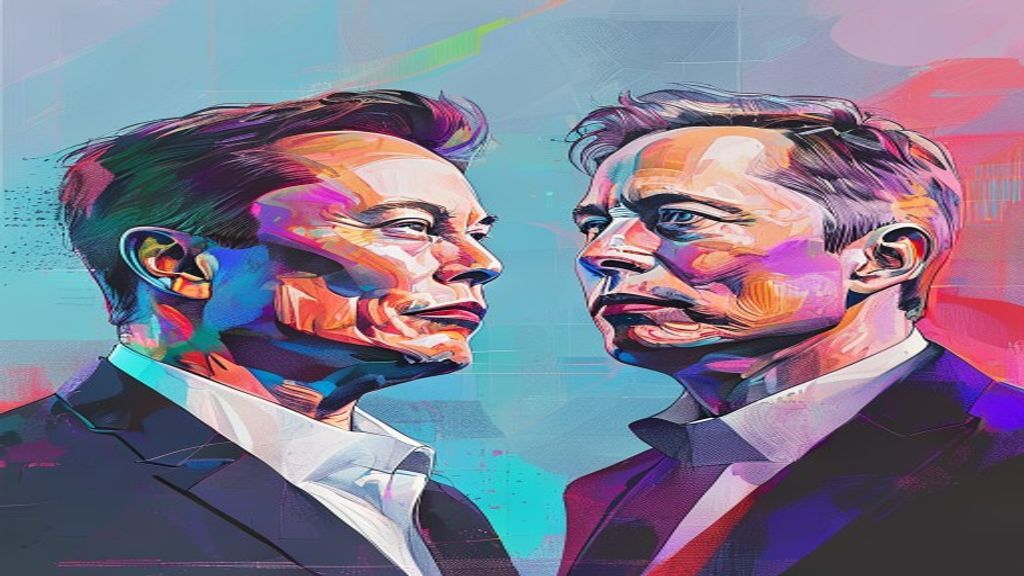
After three weeks of testimony from some of the most powerful — and mutually hostile — people in tech, a jury needed just two hours to throw the entire Musk v. Altman case in the trash.
The verdict wasn't even about the merits. The jury dismissed Elon Musk's claims against Sam Altman and OpenAI on statute of limitations grounds, meaning the case was effectively dead on arrival before a single witness finished speaking. All that courtroom drama, and the legal outcome was essentially a procedural footnote.
Here's the backstory. Musk was one of OpenAI's original cofounders and a major early donor. He claims Altman and cofounder Greg Brockman lured him in with promises of building AI for the benefit of humanity, then quietly pivoted toward becoming a for-profit juggernaut with Microsoft as a key backer. Musk wanted Altman and Brockman removed from the company and asked the court to block OpenAI's conversion into a public benefit corporation.
OpenAI's defense was blunt: this lawsuit was never about principle. Their lawyers argued it was a calculated move by a competitor — Musk now runs xAI, which makes ChatGPT rival Grok — to kneecap a company he no longer controls. It's hard to ignore the conflict of interest there.
The witness list alone reads like a Silicon Valley drama series. Musk testified. So did Altman, Brockman, Microsoft CEO Satya Nadella, and Shivon Zilis — a former OpenAI board member who also happens to be the mother of several of Musk's children. The courthouse was described by reporters on the ground as something close to a circus, with protests outside nearly every day.
But here's what makes this story bigger than a legal outcome. The trial pulled back the curtain on a world where personal vendettas, billion-dollar business interests, and genuine ideological disputes about AI's future are hopelessly tangled together. Nobody came out looking particularly trustworthy. Musk's motivations are clouded by his competing AI venture. Altman's team is navigating a messy transition from nonprofit roots to a structure that will make some people extraordinarily rich.
And the underlying question — who actually gets to decide how the most powerful AI systems in history are built and governed — went completely unanswered. A statute of limitations ruling doesn't resolve anything about OpenAI's direction, its obligations to the public, or whether its founding promises were ever real.
For now, Altman stays, OpenAI keeps building, and Musk walks away to fight another day — probably in a different courtroom. The trial that was supposed to reshape AI's future ended up being less a reckoning and more a very expensive argument between people who stopped trusting each other a long time ago.
AI
Graduates Boo Tech CEOs Who Dare Praise AI Onstage
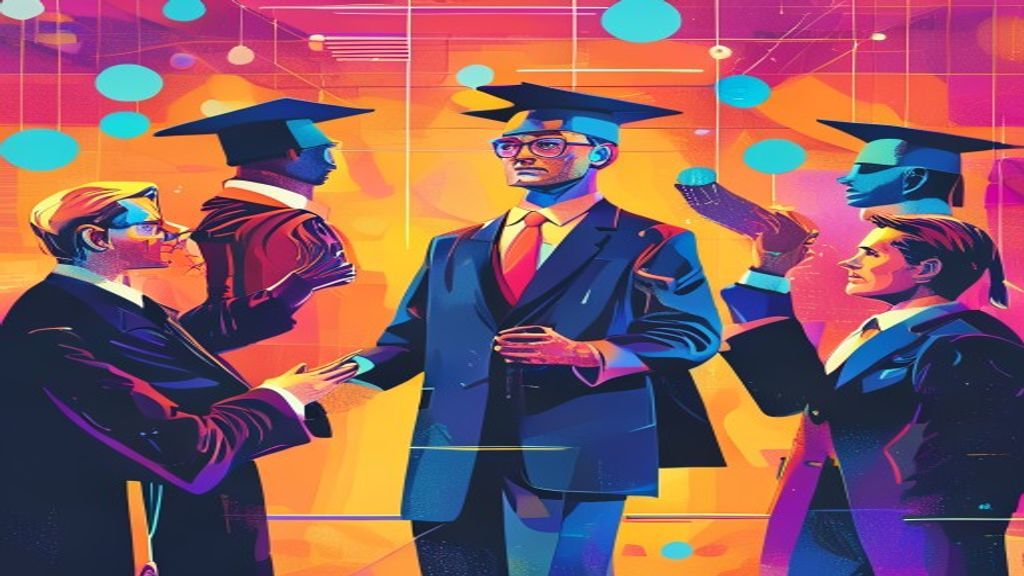
Commencement season 2026 has produced an unexpected tradition: students booing tech executives off the metaphorical stage for lecturing them about the wonders of artificial intelligence.
The videos are everywhere. Former Google CEO Eric Schmidt stepped to the podium at the University of Arizona and told graduates to stop asking questions and just get on the AI rocket ship. The crowd responded with loud, sustained booing. Other executives at schools including the University of Central Florida and Middle Tennessee State University got similar receptions after delivering their own AI-is-inevitable sermons to rooms full of students who did not ask for that particular sermon.
The executives seemed genuinely surprised. They probably shouldn't have been.
These graduates just spent four years and tens of thousands of dollars — or more — earning degrees in fields that AI is actively disrupting. They are entering a job market where hiring has slowed, creative industries are in turmoil, and the technology being cheerfully described as their bright future is the same one companies are using to justify not hiring humans. The disconnect between speaker and audience was not subtle.
One graduate put it cleanly: a billionaire who will never worry about a rent payment again telling young people to simply embrace the technology replacing them is not inspiration. It is tone-deafness dressed up in a suit.
What seems to irritate graduates most is not AI itself but the attitude surrounding it. Several of the executives who received boos framed AI adoption as mandatory and obvious, treating skepticism as naivety rather than a reasonable response to real consequences. Scott Borchetta, the music industry CEO who helped launch Taylor Swift's career, reportedly mocked student hecklers mid-speech and told critics to just deal with it. That approach went about as well as you would expect.
There is a generational fault line running through this moment. The people most enthusiastically promoting AI at commencements are largely the ones who built their wealth and careers long before the technology existed. The people being told to get excited are the ones who will live with its effects on employment, creative work, the environment, and the broader information ecosystem — all issues that researchers have been raising serious flags about for years.
The booing is not just a vibe. It reflects something real about how young people see the gap between AI's loudest advocates and the actual texture of their lives. They are not anti-technology. They are skeptical of being told that disruption is something to celebrate when they are the ones being disrupted.
Graduation season is not over. If executives keep showing up with the same talking points, they should probably expect the same response. The students have made their feelings clear, and they have very good lungs.
Source: The Verge
The videos are everywhere. Former Google CEO Eric Schmidt stepped to the podium at the University of Arizona and told graduates to stop asking questions and just get on the AI rocket ship. The crowd responded with loud, sustained booing. Other executives at schools including the University of Central Florida and Middle Tennessee State University got similar receptions after delivering their own AI-is-inevitable sermons to rooms full of students who did not ask for that particular sermon.
The executives seemed genuinely surprised. They probably shouldn't have been.
These graduates just spent four years and tens of thousands of dollars — or more — earning degrees in fields that AI is actively disrupting. They are entering a job market where hiring has slowed, creative industries are in turmoil, and the technology being cheerfully described as their bright future is the same one companies are using to justify not hiring humans. The disconnect between speaker and audience was not subtle.
One graduate put it cleanly: a billionaire who will never worry about a rent payment again telling young people to simply embrace the technology replacing them is not inspiration. It is tone-deafness dressed up in a suit.
What seems to irritate graduates most is not AI itself but the attitude surrounding it. Several of the executives who received boos framed AI adoption as mandatory and obvious, treating skepticism as naivety rather than a reasonable response to real consequences. Scott Borchetta, the music industry CEO who helped launch Taylor Swift's career, reportedly mocked student hecklers mid-speech and told critics to just deal with it. That approach went about as well as you would expect.
There is a generational fault line running through this moment. The people most enthusiastically promoting AI at commencements are largely the ones who built their wealth and careers long before the technology existed. The people being told to get excited are the ones who will live with its effects on employment, creative work, the environment, and the broader information ecosystem — all issues that researchers have been raising serious flags about for years.
The booing is not just a vibe. It reflects something real about how young people see the gap between AI's loudest advocates and the actual texture of their lives. They are not anti-technology. They are skeptical of being told that disruption is something to celebrate when they are the ones being disrupted.
Graduation season is not over. If executives keep showing up with the same talking points, they should probably expect the same response. The students have made their feelings clear, and they have very good lungs.
Enjoyed this?
Get stories like this delivered every Tuesday — free.