
Here is a detail that should stop you cold: the Department of Homeland Security used a law written to track imported goods — one that predates World War II — to demand Google hand over the location data and activity logs of a Canadian man who has not set foot in the United States in over a decade.
The man, whose name has not been made public, had been posting criticism of the Trump administration online after two people were killed by federal immigration agents in Minneapolis earlier this year. Shortly after those posts, DHS issued Google what is called a customs summons — a legal tool historically reserved for investigating tariff compliance and import duties — demanding records on the man's physical movements and online activity.
This is not a subtle workaround. The Tariff Act of 1930, which DHS cited in the summons, was designed to help customs officials figure out whether someone owed money on imported goods. It has nothing to do with social media posts or the whereabouts of foreign nationals living abroad. Attorneys familiar with customs law say the statute was never envisioned to be stretched anywhere near this far.
What makes the legal maneuver particularly aggressive is that a customs summons is an administrative subpoena — meaning no judge signs off on it, no grand jury reviews it, and there is no independent check before it lands in a company's inbox. Google apparently received the request and, despite DHS asking it to stay quiet about the summons indefinitely, notified the man anyway. His first reaction, through his attorneys, was that the whole thing had to be a scam.
It was not. The ACLU is now suing DHS Secretary Markwayne Mullin on the man's behalf, arguing the government is exploiting the fact that major tech companies are headquartered on American soil to reach into the private lives of people who are entirely outside US jurisdiction. The logic being tested here is troubling: if you store your data with an American company, does that make you fair game for American surveillance, regardless of where you live or what you have done?
That question matters well beyond this single case. There are hundreds of millions of people around the world who use Google, Apple, Meta, and other US-based platforms every day. If DHS can dust off a Depression-era trade law to pull location data on a Canadian posting political opinions online, the implicit message to everyone else is fairly clear.
The government has not explained in the summons why the man was under investigation, other than citing the 1930 statute. His lawyers say he imported or exported nothing from the United States during the period DHS requested records for. What he did do was criticize immigration enforcement on social media — and apparently that was enough to trigger a federal data demand targeting a foreign citizen on foreign soil.
ROBOTICS
Roomba Creator Returns With an AI-Powered Robot Companion Pet
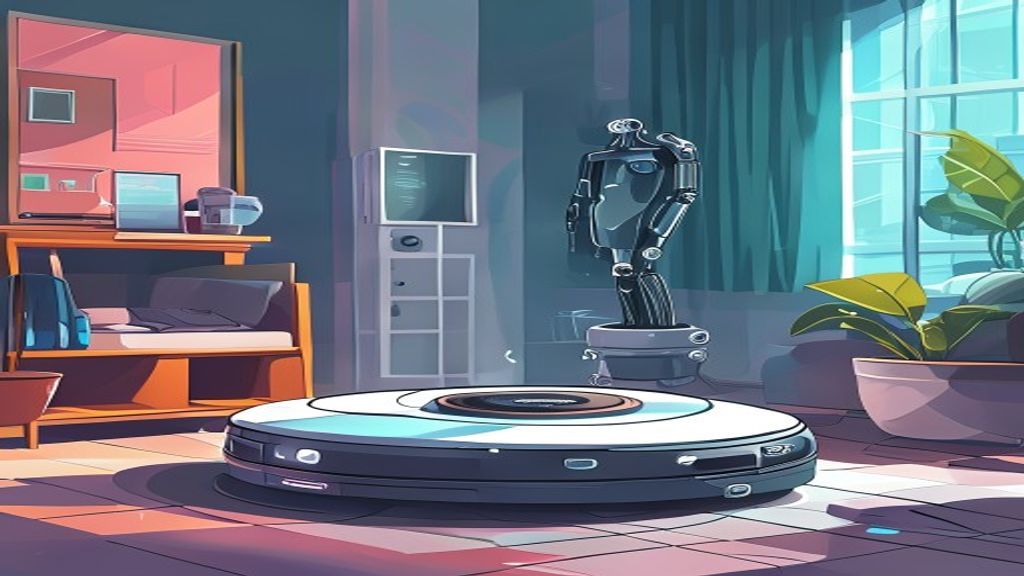
The man who put robot vacuums in 50 million homes spent the last year quietly building something completely different — a quadruped AI companion that looks like a golden retriever crossed with a barn owl, and is designed to make you feel less alone.
Colin Angle, who co-founded iRobot and shepherded the Roomba from a quirky startup idea into a household staple, unveiled his new company this week at the Wall Street Journal's Future of Everything conference. The company is called Familiar Machines and Magic, and its debut product — simply called the Familiar — is a dog-sized robot built not for productivity, but for emotional connection.
That framing is deliberate. Angle is not pitching this as a smarter home gadget or a more entertaining toy. He is making a direct argument that the next meaningful frontier in robotics is not dexterity or humanoid form, but the ability to build genuine relationships with people. The Familiar uses generative AI running on a device-side model to engage with its owner, develop what the company describes as a distinct personality, and respond dynamically to its environment — moving around the home on all fours like a real pet.
Angle has actually been waiting to build something like this for most of his career. When he co-founded iRobot back in 1990, the original name for the company was Artificial Creatures Inc. The ambition was always to create something that felt alive. The technology just was not ready. Floor-cleaning robots were a practical detour, not the destination.
The timing now makes a certain kind of sense. Generative AI has made natural, responsive interaction far more achievable than it was even three years ago. Boston Dynamics and others have proven that quadruped robots can move in ways that feel organic rather than mechanical. And there is a real, documented demand for the problem Angle says the Familiar is built to address — loneliness among the elderly, engagement for young children, and companionship for people who cannot or do not have pets.
The team Angle has assembled reflects the seriousness of the effort. Familiar Machines pulled engineers and roboticists from Disney, MIT, Boston Dynamics, Bose, and Sonos — a mix that suggests they are thinking carefully about movement, sound, and emotional response, not just processing power.
The Familiar will not be available to buy until at least next year, and pricing is pegged loosely to the lifetime cost of pet ownership, which is a wide range but signals this is not meant to be a luxury object. Specific features are still being kept close.
The concept will draw skepticism, and fairly. The graveyard of robots designed for emotional connection is well-populated, and the gap between a compelling demo and a product people actually bond with is significant. But Angle has earned at least one serious look. He has done the improbable once before.
Source: The Verge
Colin Angle, who co-founded iRobot and shepherded the Roomba from a quirky startup idea into a household staple, unveiled his new company this week at the Wall Street Journal's Future of Everything conference. The company is called Familiar Machines and Magic, and its debut product — simply called the Familiar — is a dog-sized robot built not for productivity, but for emotional connection.
That framing is deliberate. Angle is not pitching this as a smarter home gadget or a more entertaining toy. He is making a direct argument that the next meaningful frontier in robotics is not dexterity or humanoid form, but the ability to build genuine relationships with people. The Familiar uses generative AI running on a device-side model to engage with its owner, develop what the company describes as a distinct personality, and respond dynamically to its environment — moving around the home on all fours like a real pet.
Angle has actually been waiting to build something like this for most of his career. When he co-founded iRobot back in 1990, the original name for the company was Artificial Creatures Inc. The ambition was always to create something that felt alive. The technology just was not ready. Floor-cleaning robots were a practical detour, not the destination.
The timing now makes a certain kind of sense. Generative AI has made natural, responsive interaction far more achievable than it was even three years ago. Boston Dynamics and others have proven that quadruped robots can move in ways that feel organic rather than mechanical. And there is a real, documented demand for the problem Angle says the Familiar is built to address — loneliness among the elderly, engagement for young children, and companionship for people who cannot or do not have pets.
The team Angle has assembled reflects the seriousness of the effort. Familiar Machines pulled engineers and roboticists from Disney, MIT, Boston Dynamics, Bose, and Sonos — a mix that suggests they are thinking carefully about movement, sound, and emotional response, not just processing power.
The Familiar will not be available to buy until at least next year, and pricing is pegged loosely to the lifetime cost of pet ownership, which is a wide range but signals this is not meant to be a luxury object. Specific features are still being kept close.
The concept will draw skepticism, and fairly. The graveyard of robots designed for emotional connection is well-populated, and the gap between a compelling demo and a product people actually bond with is significant. But Angle has earned at least one serious look. He has done the improbable once before.
Enjoyed this?
Get stories like this delivered every Tuesday — free.