
The company that once symbolized retail's slow death by digital disruption now wants to spend $56 billion buying one of the internet's oldest marketplaces. GameStop has made an unsolicited bid to acquire eBay, and CEO Ryan Cohen is framing it as nothing less than the construction of a legitimate Amazon rival. eBay, for its part, says it will "carefully review" the offer — which is corporate-speak for "we did not see this coming."
The financing picture here is genuinely worth scrutinizing. GameStop says it's putting up $9.4 billion from its own balance sheet and tapping TD Securities for up to $20 billion more. That still leaves a multibillion-dollar gap with no clear explanation of how it gets filled. Cohen has reportedly floated the idea of bringing in outside investors, possibly including Middle Eastern sovereign-wealth funds, to bridge the difference. The fact that a deal this size has this many open questions is either bold strategic ambiguity or a red flag — possibly both.
Cohen's personal financial incentives are impossible to ignore here. Under his current compensation structure, he stands to earn as much as $35 billion if GameStop hits certain targets, including a market cap of $100 billion. Right now, GameStop is nowhere near that number. Acquiring eBay — which moves hundreds of billions in gross merchandise value annually — would be a dramatic shortcut to a much larger balance sheet and a far more credible growth story.
But let's be honest about where GameStop is actually standing right now. The company shuttered more than 700 US stores in the past year alone and ended 2025 with just under 1,600 locations left. Revenue dropped 14 percent in the fourth quarter of 2025, even as Cohen pushed the company toward trading cards and collectibles as a physical retail lifeline. The memestock magic that made GameStop a household name in 2021 hasn't translated into a sustainable business model — at least not yet.
The strategic logic for eBay, though, is more interesting than it might first appear. eBay has spent years struggling to define itself against Amazon's dominance, oscillating between chasing the same mass-market buyers and leaning into its niche resale and collectibles base. Cohen clearly sees an underutilized asset. His pitch is essentially that eBay has the infrastructure, the user base, and the brand recognition to be a genuine challenger — it just needs someone willing to make aggressive bets.
Whether Cohen can pull this off is a completely different question. He's proven he can rally retail investors and reshape a narrative. Building a $100 billion e-commerce operation from a struggling video game retailer is a much harder ask. Expect the next few weeks to involve leaked memos, proxy fight rumors, and a lot of very loud opinions on financial Twitter.
SCIENCE
Toyota's $10 billion private city is real and full of cameras
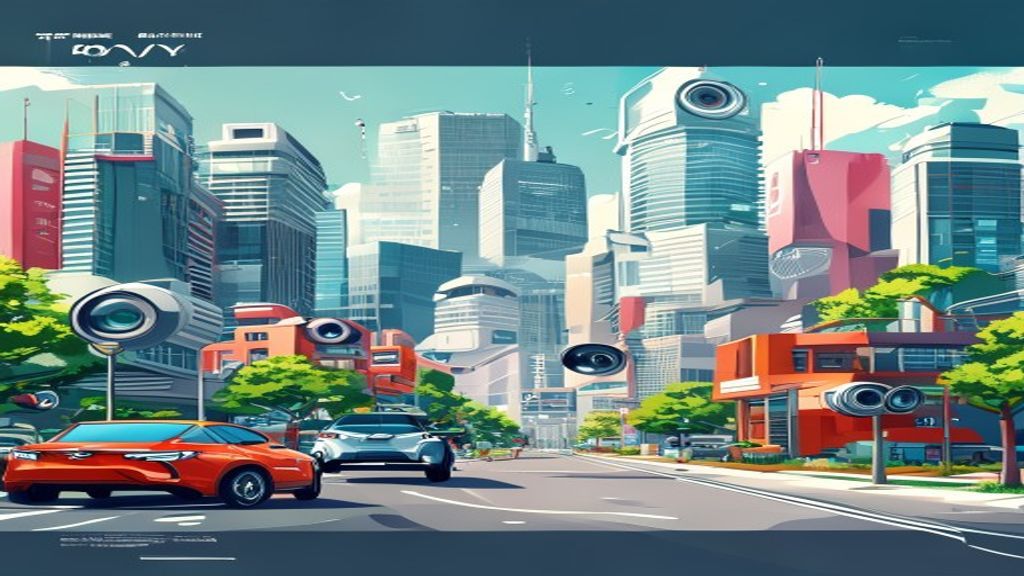
Toyota spent $10 billion building a city, moved in exactly 100 people, and hung cameras on virtually every surface. Welcome to Woven City, the most expensive proof-of-concept in automotive history.
The project traces back to a 2020 Consumer Electronics Show announcement where Toyota CEO Akio Toyoda promised a living laboratory for the future of mobility. Six years and an estimated $10 billion later, the first wave of handpicked residents — called "Weavers" — began settling into a sensor-packed mini-metropolis built atop a former factory site near Mount Fuji. It is, depending on your disposition, either one of the most ambitious urban experiments ever attempted or an extremely well-funded surveillance project with nice landscaping.
The camera density is the thing that grabs you first. A single intersection inside Woven City reportedly has eight cameras trained on it. Building ceilings are lined with them. Even the on-site coffee shop has half a dozen overhead. All of this footage feeds into what Toyota calls the Woven City AI Vision Engine, an agentic monitoring system designed to track, catalog, and flag activity across the entire development.
The stated purpose is road safety, and Toyota's reasoning is actually coherent. The company's CTO for the project, John Absmeier, makes the point that autonomous vehicle systems — however sophisticated their onboard sensors — can't see around corners. The only way to detect a child running out from behind a parked truck, the argument goes, is with fixed cameras watching the full environment and communicating warnings to approaching vehicles in real time. This is the vehicle-to-everything communications vision that the auto industry has been chasing for decades, and Woven City is Toyota's attempt to actually build it.
But the system can do more than spot pedestrians near crosswalks. A demo showed it identifying potential shoplifters in retail environments. Toyota says there's no facial recognition involved, but the platform can still follow individuals across the camera network using clothing as an identifier. That's a meaningful distinction that shrinks considerably the more you think about it.
The privacy tension here is real, and Toyota seems aware of it. The company surveyed people across multiple countries about their comfort with this kind of monitoring. Japanese respondents — the people actually living closest to Woven City — came out among the most privacy-conscious in the sample. That's a complicated finding for a project built almost entirely around the idea that ubiquitous sensing is a public good.
For now, Woven City is less a city than an experiment with residential ambitions. One hundred residents is a long way from the critical mass needed to test infrastructure at meaningful scale. But Toyota is playing a long game here, and the data being generated — about movement, behavior, safety incidents, and system performance — is presumably the whole point. The city is the product. The residents are the methodology.
Source: Ars Technica
The project traces back to a 2020 Consumer Electronics Show announcement where Toyota CEO Akio Toyoda promised a living laboratory for the future of mobility. Six years and an estimated $10 billion later, the first wave of handpicked residents — called "Weavers" — began settling into a sensor-packed mini-metropolis built atop a former factory site near Mount Fuji. It is, depending on your disposition, either one of the most ambitious urban experiments ever attempted or an extremely well-funded surveillance project with nice landscaping.
The camera density is the thing that grabs you first. A single intersection inside Woven City reportedly has eight cameras trained on it. Building ceilings are lined with them. Even the on-site coffee shop has half a dozen overhead. All of this footage feeds into what Toyota calls the Woven City AI Vision Engine, an agentic monitoring system designed to track, catalog, and flag activity across the entire development.
The stated purpose is road safety, and Toyota's reasoning is actually coherent. The company's CTO for the project, John Absmeier, makes the point that autonomous vehicle systems — however sophisticated their onboard sensors — can't see around corners. The only way to detect a child running out from behind a parked truck, the argument goes, is with fixed cameras watching the full environment and communicating warnings to approaching vehicles in real time. This is the vehicle-to-everything communications vision that the auto industry has been chasing for decades, and Woven City is Toyota's attempt to actually build it.
But the system can do more than spot pedestrians near crosswalks. A demo showed it identifying potential shoplifters in retail environments. Toyota says there's no facial recognition involved, but the platform can still follow individuals across the camera network using clothing as an identifier. That's a meaningful distinction that shrinks considerably the more you think about it.
The privacy tension here is real, and Toyota seems aware of it. The company surveyed people across multiple countries about their comfort with this kind of monitoring. Japanese respondents — the people actually living closest to Woven City — came out among the most privacy-conscious in the sample. That's a complicated finding for a project built almost entirely around the idea that ubiquitous sensing is a public good.
For now, Woven City is less a city than an experiment with residential ambitions. One hundred residents is a long way from the critical mass needed to test infrastructure at meaningful scale. But Toyota is playing a long game here, and the data being generated — about movement, behavior, safety incidents, and system performance — is presumably the whole point. The city is the product. The residents are the methodology.
Enjoyed this?
Get stories like this delivered every Tuesday — free.