
At some point in the mid-2000s, Nintendo simply stopped selling its products to Amazon. Not a quiet wind-down. Not a contract dispute over shipping terms. Nintendo walked away because, according to former Nintendo of America President Reggie Fils-Aimé, Amazon asked them to do something illegal.
Fils-Aimé shared the story during a recent lecture at NYU, and it is a genuinely wild anecdote about how Amazon operated during its aggressive early expansion beyond books. At the time, Amazon was on a mission to undercut every retailer in America on price — including Walmart, which was basically the final boss of cheap. To make that happen, Amazon apparently went to Nintendo and asked for what Fils-Aimé described as an "obscene amount of financial support."
He did not spell out exactly what form that support would have taken, but the implication is clear enough. Giving one retailer preferential financial treatment to undercut competitors can run straight into price discrimination laws, specifically the Robinson-Patman Act, which prohibits manufacturers from offering different pricing terms to competing retailers without justification. Fils-Aimé says he told the Amazon executive directly: "You know that's illegal, right? I can't do that."
What happened next is the part that says a lot about how Nintendo has always operated. Rather than find a workaround or quietly comply, Nintendo just pulled out entirely. No more selling to Amazon. Full stop.
Fils-Aimé framed it as a matter of principle, not just legal caution. Agreeing would have put Nintendo's relationships with other retailers — think Best Buy, Target, Walmart itself — at serious risk. If word got out that Amazon was getting special financial treatment, every other retail partner would have had a legitimate grievance. Nintendo decided it was not worth it.
The standoff lasted years. For a long stretch of the DS and Wii era, finding Nintendo hardware on Amazon was either impossible or involved third-party sellers marking things up significantly. It was an odd gap for a major e-commerce platform, and now we know exactly why it existed.
The two companies eventually buried the hatchet. You can buy a Switch 2 on Amazon today without any drama. But Fils-Aimé's point in telling the story seems to be about the long game. Refusing to be pushed around, even by the biggest player in the room, is how you build the kind of respect that makes partnerships work on your terms later.
There is also something quietly remarkable about the fact that this story is only coming out now, years after the fact, through a college lecture. Amazon's early expansion tactics were well known for being aggressive, but a sitting executive of a major gaming company telling them their request was literally illegal and then cutting them off entirely is a different level of confrontation. Fils-Aimé clearly held onto that one for a while.
SCIENCE
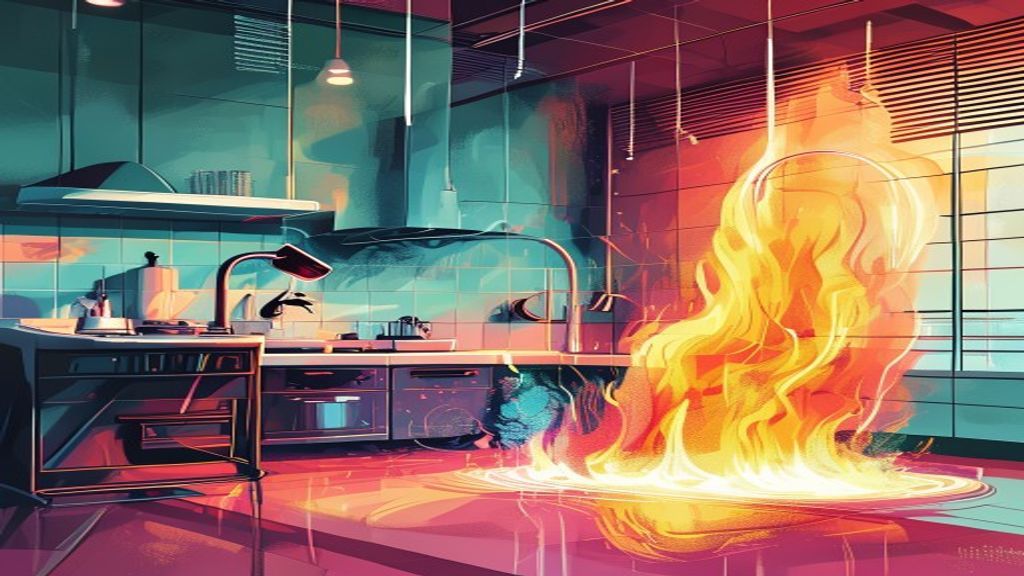
Sound waves extinguish kitchen fires but may not replace sprinklers
A startup in California thinks it can replace your fire sprinklers with speakers. That sentence sounds like a pitch from a very confident person at a hackathon, but Sonic Fire Tech has actual firefighters watching its demonstrations, and the underlying science is real.
The technology is called acoustic fire suppression, and it has been sitting in scientific literature for decades without anyone turning it into a product. The basic mechanism is straightforward: infrasound waves vibrate at a frequency that pushes oxygen molecules away from a fuel source. No oxygen, no combustion. The fire goes out. In a controlled kitchen demonstration in Concord, California, a grease fire on an unattended stove was extinguished within seconds after an AI-connected sensor detected the blaze and triggered wall-mounted emitters.
The demo had real credibility behind it. Officials from Contra Costa County Fire Protection District and CAL FIRE, the state's main wildland firefighting agency, were present alongside journalists. That is not the crowd you invite if you are running a vaporware show.
Sonic Fire Tech's pitch goes beyond the cool factor. Sprinklers work, but they also dump water on everything in the vicinity, which is fine if you are saving a building from burning down but genuinely devastating if you are running a data center or a server room. Water and electronics are not friends. The company is targeting exactly those high-value environments where water damage from a suppression system could be almost as bad as the fire itself.
CEO Geoff Bruder also made a point of noting that the system can be distributed through ductwork, not just aimed like a fire extinguisher. That matters for whole-room or whole-building coverage, which is what you need if you want to actually replace a sprinkler grid.
But here is where it gets complicated. Two independent experts who spoke with Ars Technica after the event were skeptical, particularly about the technology's ability to handle anything beyond a contained, small-scale fire. A kitchen grease fire caught early is a very different problem from a room engulfed in flames, and a wildfire is a completely different category of challenge. The company has also floated the idea of a backpack version for wildland firefighters, which experts found even harder to take seriously at this stage.
California requires sprinklers in all new homes built after 2011, so the regulatory path to actually replacing them would be significant. Sonic Fire Tech would need to prove consistent, reliable performance across a wide range of fire scenarios before any building code would let it substitute for a proven system.
The technology is genuinely interesting and the science checks out on a basic level. Whether a startup can engineer it into something robust enough to protect a home or a commercial building at scale is a much harder question, and right now, the honest answer is that nobody knows yet.
Source: Ars Technica
The technology is called acoustic fire suppression, and it has been sitting in scientific literature for decades without anyone turning it into a product. The basic mechanism is straightforward: infrasound waves vibrate at a frequency that pushes oxygen molecules away from a fuel source. No oxygen, no combustion. The fire goes out. In a controlled kitchen demonstration in Concord, California, a grease fire on an unattended stove was extinguished within seconds after an AI-connected sensor detected the blaze and triggered wall-mounted emitters.
The demo had real credibility behind it. Officials from Contra Costa County Fire Protection District and CAL FIRE, the state's main wildland firefighting agency, were present alongside journalists. That is not the crowd you invite if you are running a vaporware show.
Sonic Fire Tech's pitch goes beyond the cool factor. Sprinklers work, but they also dump water on everything in the vicinity, which is fine if you are saving a building from burning down but genuinely devastating if you are running a data center or a server room. Water and electronics are not friends. The company is targeting exactly those high-value environments where water damage from a suppression system could be almost as bad as the fire itself.
CEO Geoff Bruder also made a point of noting that the system can be distributed through ductwork, not just aimed like a fire extinguisher. That matters for whole-room or whole-building coverage, which is what you need if you want to actually replace a sprinkler grid.
But here is where it gets complicated. Two independent experts who spoke with Ars Technica after the event were skeptical, particularly about the technology's ability to handle anything beyond a contained, small-scale fire. A kitchen grease fire caught early is a very different problem from a room engulfed in flames, and a wildfire is a completely different category of challenge. The company has also floated the idea of a backpack version for wildland firefighters, which experts found even harder to take seriously at this stage.
California requires sprinklers in all new homes built after 2011, so the regulatory path to actually replacing them would be significant. Sonic Fire Tech would need to prove consistent, reliable performance across a wide range of fire scenarios before any building code would let it substitute for a proven system.
The technology is genuinely interesting and the science checks out on a basic level. Whether a startup can engineer it into something robust enough to protect a home or a commercial building at scale is a much harder question, and right now, the honest answer is that nobody knows yet.
Enjoyed this?
Get stories like this delivered every Tuesday — free.