
For years, Microsoft's multibillion-dollar bet on OpenAI came with a quiet but powerful perk: exclusivity. If you wanted OpenAI's best models powering your business, Azure was essentially your only real option. That arrangement is now officially over.
Microsoft and OpenAI have renegotiated their partnership agreement in a way that lets OpenAI sell its models directly through competing cloud platforms — including Amazon Web Services and Google Cloud. That's a pretty remarkable sentence to write. Two of Microsoft's fiercest cloud rivals can now offer OpenAI's technology to their customers, and Microsoft signed off on it.
So why would Microsoft agree to this? The short answer is that holding OpenAI too tightly was starting to create problems for both parties. OpenAI has been pushing hard to expand its commercial reach and build out its own infrastructure. Keeping it locked to Azure made sense when OpenAI was a scrappy research lab burning through compute. It makes less sense now that OpenAI is a global AI powerhouse with enterprise ambitions and a reported valuation north of $150 billion.
For Microsoft, the calculus is different but equally pragmatic. Azure still gets preferred status and deep integration with OpenAI's models — that hasn't changed. But the exclusive clause was increasingly looking like a liability. Enterprise customers who run multi-cloud environments were frustrated by the friction, and some were simply choosing alternative AI providers rather than restructuring their cloud setups around a single vendor.
There's also a competitive angle worth noting. The AI model market has gotten a lot more crowded in the past 18 months. Anthropic, Google's Gemini, Meta's Llama, and a growing list of open-source alternatives have given buyers real options. OpenAI being Azure-exclusive was starting to look less like a feature and more like a constraint that pushed price-sensitive or cloud-agnostic customers toward the competition entirely.
The revised deal also reportedly gives OpenAI more flexibility to pursue its own compute infrastructure and hardware partnerships — a signal that the company is serious about reducing its long-term dependence on any single provider, Microsoft included. That's a notable strategic shift for a company that has relied so heavily on Microsoft's investment and infrastructure to scale.
What this means practically is that enterprise buyers now have a cleaner path to using GPT-4 and future OpenAI models without being forced into an Azure contract. Expect AWS and Google Cloud to market this aggressively. Both platforms have been angling to close the perceived AI gap with Azure, and having OpenAI models in their catalogs is a meaningful step in that direction.
The Microsoft-OpenAI relationship isn't over — far from it. But it's clearly evolving from an exclusive partnership into something that looks more like a preferred vendor arrangement. In a market moving this fast, that distinction matters more than it might seem.
POLICY
FCC Targets ABC Broadcast Licenses After Kimmel Joke Offends Trump
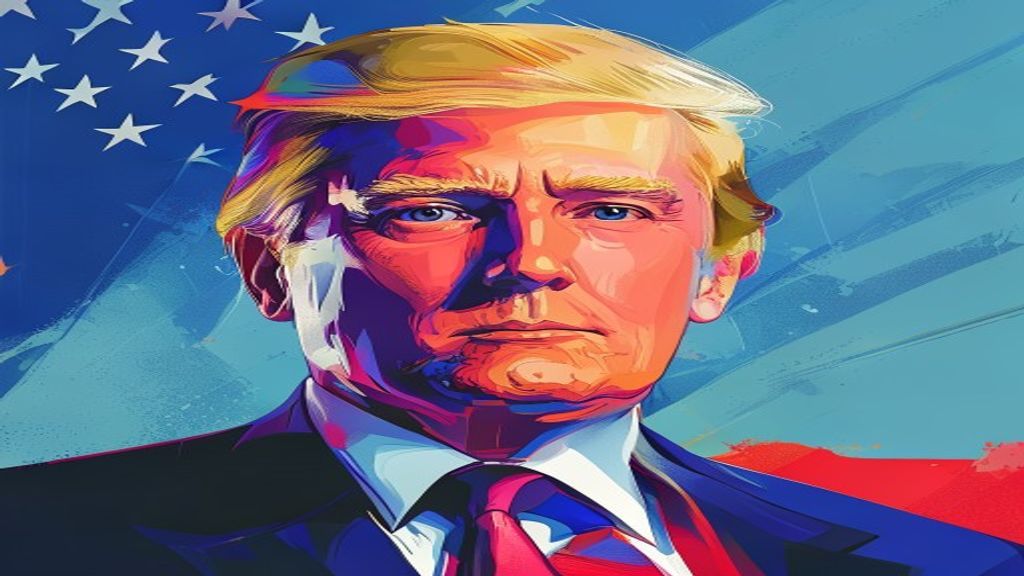
The Federal Communications Commission just ordered ABC to file early license renewals for all of its TV stations — a process that wasn't scheduled to happen until 2028 at the earliest. The timing is hard to ignore: the order came one day after President Trump and Melania Trump publicly called for Jimmy Kimmel's firing over a joke made during a mock White House Correspondents' Dinner roast.
The joke in question had Kimmel quipping that Melania looked like an "expectant widow" and suggesting the couple had been introduced through Jeffrey Epstein. Not exactly subtle material. But late-night hosts have been roasting presidents and first ladies for decades without triggering federal broadcast license reviews, which makes this moment worth examining carefully.
The FCC's official justification centers on an existing investigation into Disney's diversity, equity, and inclusion practices. FCC Chairman Brendan Carr has framed DEI programs as a form of unlawful discrimination, and the agency says ABC hasn't adequately responded to its letters of inquiry on the matter. The early renewal demand is being positioned as a natural extension of that ongoing investigation.
But according to an NBC News report, a source close to the situation said the process was specifically fast-tracked after the Kimmel joke landed. That detail is doing a lot of work. It shifts the story from a routine regulatory action into something that looks considerably more like the government using broadcast licensing as a pressure lever against a media company over a comedian's punchline.
Let's be clear about what the FCC can and can't actually do here. Revoking a broadcast license is extraordinarily difficult under current law — legal experts have described it as close to impossible in practice. The agency hasn't revoked a major network affiliate's license in decades. And none of ABC's eight owned stations are up for renewal until between 2028 and 2031. The early renewal demand doesn't change the underlying legal standard, it just accelerates the timeline and creates near-term administrative pressure.
Disney pushed back firmly, saying ABC has a long record of operating in full compliance with FCC rules and serving local communities through news and public interest programming. The company said it's confident that record holds up under both the Communications Act and the First Amendment.
That last part — the First Amendment reference — is where this gets genuinely significant. The idea that a federal agency would accelerate regulatory scrutiny of a broadcast license in direct response to political speech is the kind of thing that makes media law attorneys very uncomfortable, regardless of their views on the joke itself.
Whether or not the FCC follows through with any meaningful consequence, the signal being sent is clear. Broadcasters operate on government-issued licenses, and that dependency has always created a theoretical pressure point. The question now is whether that pressure is being applied in earnest.
Source: Ars Technica
The joke in question had Kimmel quipping that Melania looked like an "expectant widow" and suggesting the couple had been introduced through Jeffrey Epstein. Not exactly subtle material. But late-night hosts have been roasting presidents and first ladies for decades without triggering federal broadcast license reviews, which makes this moment worth examining carefully.
The FCC's official justification centers on an existing investigation into Disney's diversity, equity, and inclusion practices. FCC Chairman Brendan Carr has framed DEI programs as a form of unlawful discrimination, and the agency says ABC hasn't adequately responded to its letters of inquiry on the matter. The early renewal demand is being positioned as a natural extension of that ongoing investigation.
But according to an NBC News report, a source close to the situation said the process was specifically fast-tracked after the Kimmel joke landed. That detail is doing a lot of work. It shifts the story from a routine regulatory action into something that looks considerably more like the government using broadcast licensing as a pressure lever against a media company over a comedian's punchline.
Let's be clear about what the FCC can and can't actually do here. Revoking a broadcast license is extraordinarily difficult under current law — legal experts have described it as close to impossible in practice. The agency hasn't revoked a major network affiliate's license in decades. And none of ABC's eight owned stations are up for renewal until between 2028 and 2031. The early renewal demand doesn't change the underlying legal standard, it just accelerates the timeline and creates near-term administrative pressure.
Disney pushed back firmly, saying ABC has a long record of operating in full compliance with FCC rules and serving local communities through news and public interest programming. The company said it's confident that record holds up under both the Communications Act and the First Amendment.
That last part — the First Amendment reference — is where this gets genuinely significant. The idea that a federal agency would accelerate regulatory scrutiny of a broadcast license in direct response to political speech is the kind of thing that makes media law attorneys very uncomfortable, regardless of their views on the joke itself.
Whether or not the FCC follows through with any meaningful consequence, the signal being sent is clear. Broadcasters operate on government-issued licenses, and that dependency has always created a theoretical pressure point. The question now is whether that pressure is being applied in earnest.
Enjoyed this?
Get stories like this delivered every Tuesday — free.