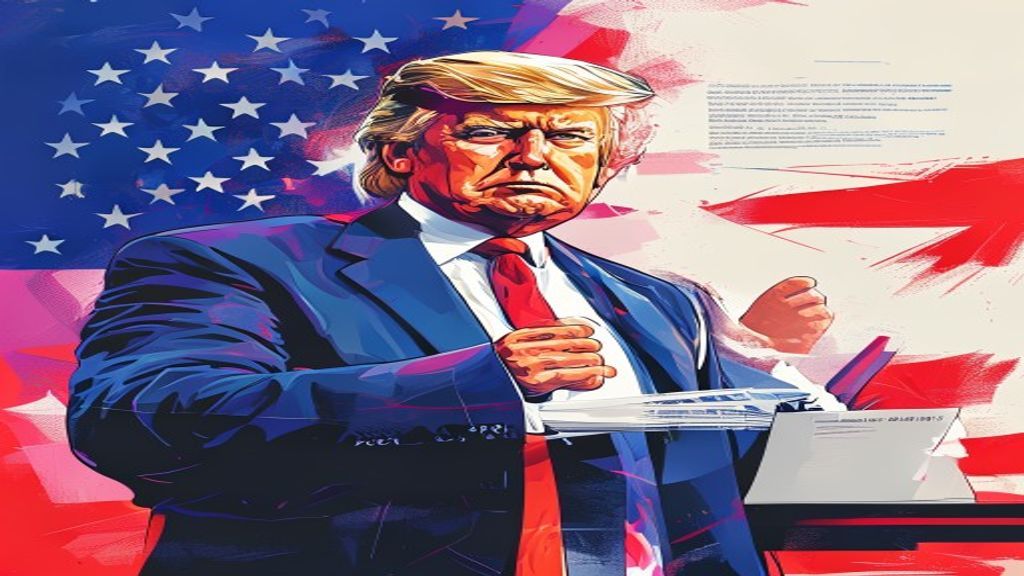
Here is something that has never happened before: a sitting president dismissed every single member of the National Science Board in one move. Not a resignation, not a quiet replacement cycle — a full sweep of the body that has quietly shaped American scientific direction for decades.
The National Science Board exists to advise both the president and Congress on the National Science Foundation, the federal agency that bankrolls fundamental research across virtually every scientific discipline. The NSF is not a niche outfit. It helped lay the technical groundwork for MRI machines, seeded the software that became Duolingo, and has fingerprints on the core infrastructure of modern smartphones. When the NSF sneezes, American innovation catches a cold.
The timing makes this even harder to dismiss as routine housekeeping. The NSF was already operating in a kind of controlled crisis — funding had slowed to historically low levels, grant disbursements had been delayed, and researchers across the country were already adjusting their expectations downward. Firing the advisory board does not fix any of that. If anything, it removes one of the last institutional checks on how the Foundation deploys whatever money it does have.
The obvious question is what comes next. A board that gets fired gets replaced. The concern among scientists and policy watchers is not that the NSB stays empty — it is who fills those seats. An advisory board stacked with political loyalists rather than working scientists would have real consequences for how research priorities get set and which projects receive backing. That might sound abstract, but it is pretty concrete when you consider that NSF-backed research underpins American competitiveness in AI, climate science, semiconductor materials, and biotechnology.
Ranking Democrat Zoe Lofgren called the move a gift to America's scientific adversaries, and that framing is worth taking seriously regardless of your politics. China has been methodically increasing its research investment for years. The gap between American and Chinese scientific output has been narrowing. Gutting an advisory board does not help close that gap.
There is a broader pattern here that the individual headlines can obscure. Funding freezes, grant cancellations, agency restructuring, and now a full board dismissal — these are not isolated events. They represent a sustained pressure campaign on the institutional infrastructure that produces American science. Each move on its own might be explained away. Together they start to look like a strategy.
The NSB has historically operated without much public attention, which is partly why this story is not leading every front page. But the quieter an institution is, the more damage you can do to it before anyone notices. By the time the consequences show up in the research pipeline, the decisions that caused them are years in the past.
SCIENCE
TSMC Refuses to Buy ASML's Most Advanced Chip Tool Over Price
ASML makes the only machines on earth capable of printing the world's most advanced chips. TSMC buys more of those machines than anyone else. So when TSMC's Co-Chief Operating Officer stood up at a symposium and said the company has no plans to purchase ASML's newest and most powerful tool, that is not a minor procurement disagreement — it is a significant signal about where the leading edge of chip manufacturing is actually headed.
The machine in question is ASML's High-NA EUV lithography system, priced at over 350 million euros per unit. For context, that is more than the GDP of some small island nations, per machine. The technology itself is genuinely impressive — it can achieve manufacturing precision below 1.4 nanometers, which pushes the boundaries of what is physically possible when etching circuits onto silicon. But TSMC's position is essentially: our current tools are good enough, and good enough does not cost 350 million euros.
That logic is worth unpacking. TSMC is not a company that skimps on equipment. It spends tens of billions of dollars annually on capital expenditure and has built its entire competitive position on being a generation ahead of everyone else in manufacturing precision. When TSMC says a tool is too expensive relative to its value, the industry listens.
The stakes for ASML are real. The Dutch company has been counting on High-NA EUV to anchor its growth plans, with a 60 billion euro revenue target set for 2030. A significant chunk of that math presumably involves TSMC ordering these machines at scale ahead of a planned production rollout in 2027 and 2028. TSMC pumping the brakes now creates a timing problem that is difficult to work around.
There is also a competitive dimension here that goes beyond the two companies. Intel has been one of the early adopters of High-NA EUV, betting that the technology gives it a path to close the manufacturing gap with TSMC. If TSMC decides its existing tools are sufficient and Intel pushes forward with the newer machines, you end up with an interesting reversal — Intel using more advanced lithography than TSMC, at least on paper. Whether that translates into better chips in practice is a separate and genuinely open question.
The broader takeaway is that the bleeding edge of chip manufacturing is running into a cost ceiling that even the richest fabs in the world are reluctant to clear. At some point, incremental precision improvements stop justifying exponential price increases. TSMC's public statement suggests that point may have arrived sooner than ASML hoped. How ASML responds — whether through pricing adjustments, new financing structures, or betting on other customers to carry the volume — will define a meaningful chapter in the semiconductor industry's next few years.
Source: TechNode
The machine in question is ASML's High-NA EUV lithography system, priced at over 350 million euros per unit. For context, that is more than the GDP of some small island nations, per machine. The technology itself is genuinely impressive — it can achieve manufacturing precision below 1.4 nanometers, which pushes the boundaries of what is physically possible when etching circuits onto silicon. But TSMC's position is essentially: our current tools are good enough, and good enough does not cost 350 million euros.
That logic is worth unpacking. TSMC is not a company that skimps on equipment. It spends tens of billions of dollars annually on capital expenditure and has built its entire competitive position on being a generation ahead of everyone else in manufacturing precision. When TSMC says a tool is too expensive relative to its value, the industry listens.
The stakes for ASML are real. The Dutch company has been counting on High-NA EUV to anchor its growth plans, with a 60 billion euro revenue target set for 2030. A significant chunk of that math presumably involves TSMC ordering these machines at scale ahead of a planned production rollout in 2027 and 2028. TSMC pumping the brakes now creates a timing problem that is difficult to work around.
There is also a competitive dimension here that goes beyond the two companies. Intel has been one of the early adopters of High-NA EUV, betting that the technology gives it a path to close the manufacturing gap with TSMC. If TSMC decides its existing tools are sufficient and Intel pushes forward with the newer machines, you end up with an interesting reversal — Intel using more advanced lithography than TSMC, at least on paper. Whether that translates into better chips in practice is a separate and genuinely open question.
The broader takeaway is that the bleeding edge of chip manufacturing is running into a cost ceiling that even the richest fabs in the world are reluctant to clear. At some point, incremental precision improvements stop justifying exponential price increases. TSMC's public statement suggests that point may have arrived sooner than ASML hoped. How ASML responds — whether through pricing adjustments, new financing structures, or betting on other customers to carry the volume — will define a meaningful chapter in the semiconductor industry's next few years.
Enjoyed this?
Get stories like this delivered every Tuesday — free.