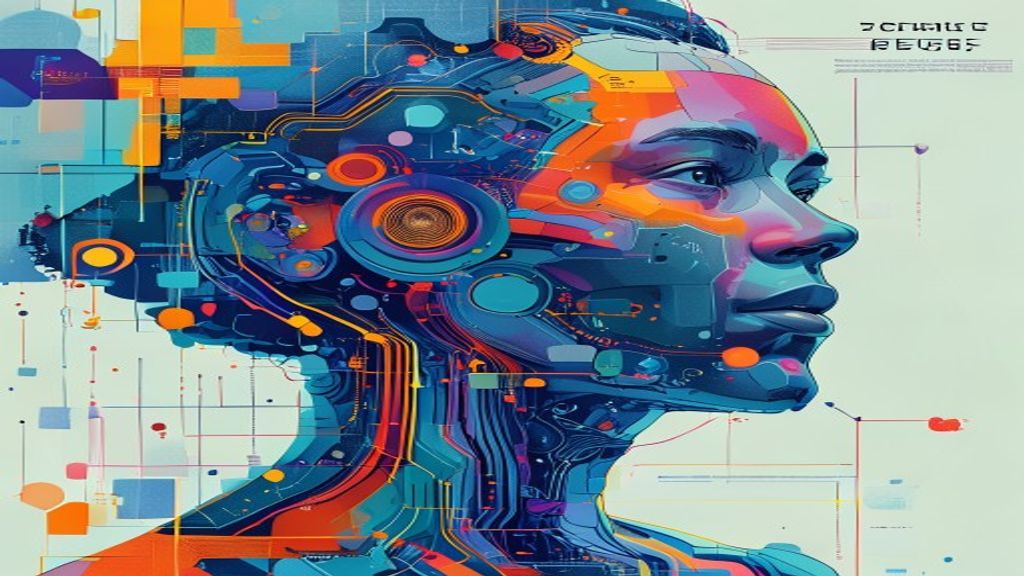
The AI leaderboard has a new name at the top again — and it's a familiar one. Anthropic's Claude Opus 4.7 has clawed back the leading position among publicly available large language models, edging out competitors in a race that has seen the top spot change hands more times this year than a relay baton.
What makes this worth paying attention to isn't just the benchmark win. It's how narrow the margin apparently is. When the gap between first and second place is measured in fractions of percentage points on standardized evals, it tells you something important: the frontier of AI capability is getting genuinely crowded, and the era of one model running away with the crown is probably over.
Claude Opus 4.7 is the latest iteration in Anthropic's flagship line, and the company has leaned hard into what it calls "character" — the idea that a capable model should also be reliably honest, careful, and resistant to manipulation. Whether that translates to real-world usefulness over raw benchmark performance is the question every enterprise buyer is currently trying to answer.
For Anthropic, reclaiming the top spot matters for reasons beyond bragging rights. The company has been in a quiet but intense battle for enterprise contracts, and in a world where procurement teams often start their shortlist with "who has the best model," being number one — even narrowly — opens doors. It's a marketing asset as much as a technical one.
The timing is also notable. Anthropic is reportedly in discussions around significant new funding rounds, and demonstrating continued technical leadership gives the company concrete evidence to put in front of investors. A benchmark lead, however thin, is a data point that shows up in pitch decks.
The broader context here is a model release cadence that has become almost dizzying. Earlier versions of Claude, GPT-4o, Gemini Ultra, and a handful of open-weight models have all traded the top position in recent months depending on which benchmark you're looking at and who's doing the measuring. Third-party evaluation is increasingly contested territory, with labs sometimes disputing methodology when results don't favor them.
For everyday users and developers, the practical takeaway is simpler: the best publicly available AI right now is very, very good, and the differences at the top are subtle enough that your choice of model might reasonably come down to pricing, API reliability, or how the system handles your specific use case rather than who won the latest eval.
Opus 4.7 being on top today doesn't guarantee it stays there next month. That's just how this market works now.

AI
OpenAI Launches Biology-Specialized Model GPT-Rosalind for Life Sciences
OpenAI just named a model after Rosalind Franklin — the chemist whose X-ray crystallography work was foundational to discovering the structure of DNA, and who was famously denied proper credit for it during her lifetime. The choice of name alone signals that GPT-Rosalind is meant to be taken seriously as a scientific tool, not just a general-purpose chatbot wearing a lab coat.
GPT-Rosalind is a purpose-built model for life sciences, currently available under limited access while OpenAI evaluates demand and refines the system. The move represents a meaningful strategic shift: rather than betting that one giant general model can serve everyone from novelists to molecular biologists equally well, OpenAI is starting to build domain-specific versions tuned for specialized professional contexts.
Life sciences is a smart place to start that experiment. The field is drowning in data — genomic sequences, clinical trial results, protein interaction databases, decades of published research — and the professionals working in it are expensive, highly trained, and perpetually short on time. A model that can meaningfully accelerate literature review, hypothesis generation, or experimental design has a clear and measurable value proposition.
The limited-access rollout also suggests OpenAI is being careful here in a way it isn't always. Biology sits at the intersection of enormous scientific potential and genuine biosecurity risk. A model that's genuinely expert in life sciences could help a graduate student design a better experiment — or, in a worst-case scenario, help a bad actor think through something far more dangerous. Controlling who gets access while the company figures out appropriate guardrails is the responsible move, even if it slows adoption.
OpenAI is pairing the Rosalind launch with a broader expansion of its Codex plugin on GitHub, which handles code generation and developer workflows. The combination isn't accidental. Bioinformatics — the overlap of biology and programming — is one of the fastest-growing areas in life sciences, and researchers who need to write analysis pipelines in Python while also interpreting the biological meaning of their results are exactly the kind of power users OpenAI wants to capture.
The competitive angle is worth noting. Google DeepMind has been aggressively positioning itself in biology, most visibly with AlphaFold's protein structure predictions that genuinely changed what's possible in drug discovery. Microsoft has been pushing Copilot into scientific research workflows. OpenAI entering the space with a dedicated model is a direct response to the recognition that general AI capability is no longer enough to win in high-stakes verticals.
Whether GPT-Rosalind can actually deliver on the promise — producing outputs that working scientists trust enough to act on — is the real test. Benchmarks will tell part of the story. The other part will be written in lab notebooks over the next year or two.
Source: VentureBeat
GPT-Rosalind is a purpose-built model for life sciences, currently available under limited access while OpenAI evaluates demand and refines the system. The move represents a meaningful strategic shift: rather than betting that one giant general model can serve everyone from novelists to molecular biologists equally well, OpenAI is starting to build domain-specific versions tuned for specialized professional contexts.
Life sciences is a smart place to start that experiment. The field is drowning in data — genomic sequences, clinical trial results, protein interaction databases, decades of published research — and the professionals working in it are expensive, highly trained, and perpetually short on time. A model that can meaningfully accelerate literature review, hypothesis generation, or experimental design has a clear and measurable value proposition.
The limited-access rollout also suggests OpenAI is being careful here in a way it isn't always. Biology sits at the intersection of enormous scientific potential and genuine biosecurity risk. A model that's genuinely expert in life sciences could help a graduate student design a better experiment — or, in a worst-case scenario, help a bad actor think through something far more dangerous. Controlling who gets access while the company figures out appropriate guardrails is the responsible move, even if it slows adoption.
OpenAI is pairing the Rosalind launch with a broader expansion of its Codex plugin on GitHub, which handles code generation and developer workflows. The combination isn't accidental. Bioinformatics — the overlap of biology and programming — is one of the fastest-growing areas in life sciences, and researchers who need to write analysis pipelines in Python while also interpreting the biological meaning of their results are exactly the kind of power users OpenAI wants to capture.
The competitive angle is worth noting. Google DeepMind has been aggressively positioning itself in biology, most visibly with AlphaFold's protein structure predictions that genuinely changed what's possible in drug discovery. Microsoft has been pushing Copilot into scientific research workflows. OpenAI entering the space with a dedicated model is a direct response to the recognition that general AI capability is no longer enough to win in high-stakes verticals.
Whether GPT-Rosalind can actually deliver on the promise — producing outputs that working scientists trust enough to act on — is the real test. Benchmarks will tell part of the story. The other part will be written in lab notebooks over the next year or two.
Enjoyed this?
Get stories like this delivered every Tuesday — free.